
The 7 best beaches in Santa Marta
Seven beaches in Santa Marta: Cabo San Juan del Guía, La Piscina, Playa Cristal and Bahía Concha, in Tayrona Park, and Playa Grande, Playa Blanca and El Rodadero, close to the city. How to get there, where you can swim and who each one is for.
1. Cabo San Juan del Guía, Tayrona Park
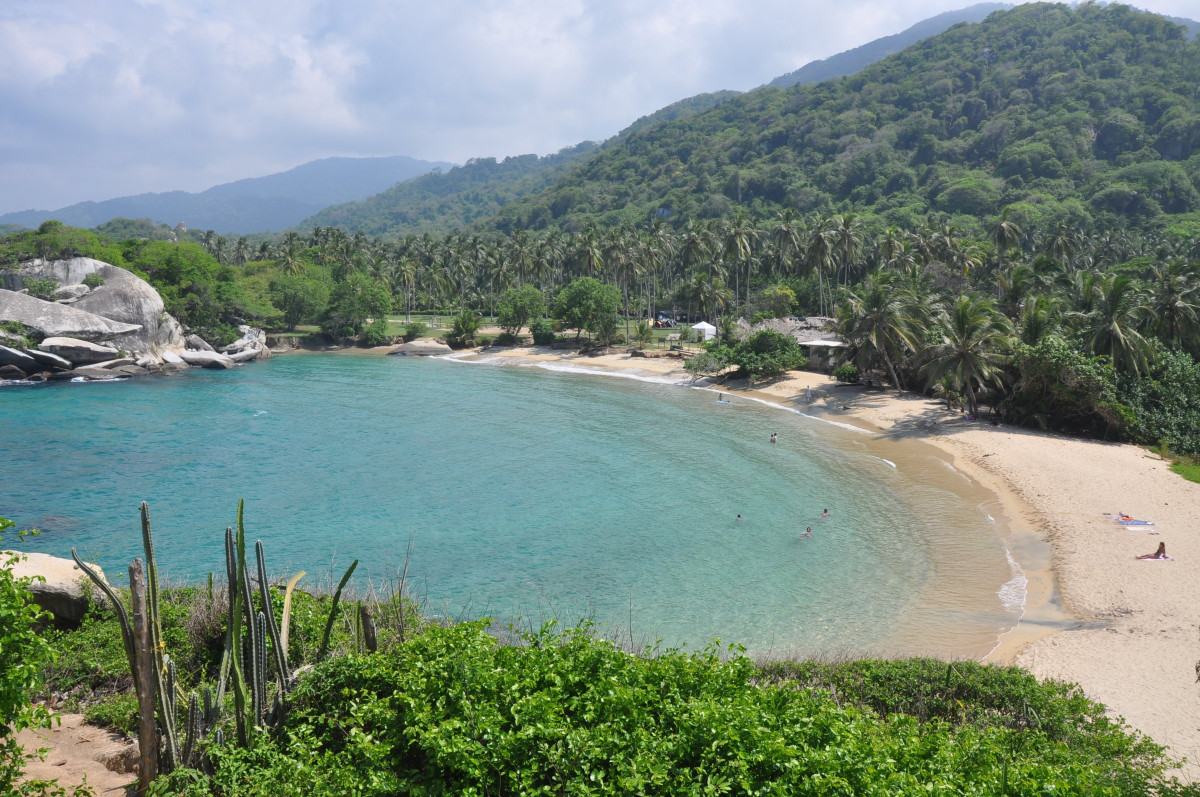
If you have to keep only one of the best beaches in Santa Marta, make it Cabo San Juan del Guía, in Tayrona Park. It is pale sand between the forest and the rocks, and you can swim, but you earn it by walking for several hours. If you want still water, La Piscina is on the same trail, and for snorkeling the one that rules is Playa Cristal, which you reach by boat from Palangana. And if you do not want to leave the city, Playa Grande, in Taganga, and Playa Blanca, next to El Rodadero, are a few minutes away by boat.
| Beach | Where it is and how you get there | Worth it if… | More information |
|---|---|---|---|
| Cabo San Juan del Guía | Tayrona; on foot from Zaino or Calabazo, or by boat | you want the classic Tayrona photo | Parques Nacionales |
| La Piscina | Tayrona; the Arrecifes–Cabo San Juan trail | you want to swim without fighting the waves | Parques Nacionales |
| Playa Cristal | Tayrona; Palangana sector and then a boat | you are going with a mask | Parques Nacionales |
| Bahía Concha | Tayrona; 15 min by car from Santa Marta and 20 on foot | you have only one day and little appetite for walking | Parques Nacionales |
| Playa Grande | Taganga; 5 min by boat or by trail | you want a cheap afternoon with fried fish | — |
| Playa Blanca | North of El Rodadero; boat or trail | you are going with children or want water sports | — |
| El Rodadero | South of the city | you prefer to have everything at hand | — |
Santa Marta’s beaches: Tayrona or the city
In Santa Marta there are two kinds of beach, and it helps to know which one you will spend the day on. Those in Tayrona National Natural Park, to the northeast, have more forest and fewer people, but also entry hours, rules and closures. Those of the city and its surroundings, such as Taganga and El Rodadero, are around the corner and have everything. Park fees and boat fares change with the season, so ask the price before you get on.
If you are still putting the trip together, the Santa Marta guide covers the basics, and the guide to going to Tayrona Park from Santa Marta explains how to get there. To decide where to sleep, use the areas to stay and our best hotels in Santa Marta. If you prefer to reach the beaches by sea, look at the boat and yacht outings or the tours in Santa Marta.
Cabo San Juan, the best beach in Santa Marta if you can handle the walk
It is the image everyone associates with Tayrona: a crescent of pale sand, water between green and blue, a rocky headland at the tip and the forest tight against your back. It sits at the end of the Cañaveral–Arrecifes trail and is one of the few beaches in the park where you can get in the sea in peace. At the main beach you can swim and freedive, and there is gear rental and places to buy something to eat.
Most people enter on foot through Zaino, the main entrance, 32 kilometers from Santa Marta. The other option is Calabazo, at kilometer 20 of the Troncal del Caribe. If walking is not for you, boats leave from Santa Marta, El Rodadero and Taganga.
The walk is part of the plan. Bring shoes with grip, plenty of water and some fitness. Along the way you will pass Arrecifes, which is beautiful to look at, but you do not swim there: the sea is rough and it is not a swimming area. Do not get in with a red flag at any beach. Parques Nacionales closes Tayrona on set dates three times a year and requires accident insurance to enter. Check the official calendar before you go, and watch for extra closures. Look at the hours of each entrance: in low season, Zaino receives visitors from 8:00 a.m. to 5:00 p.m.
2. La Piscina, Tayrona Park
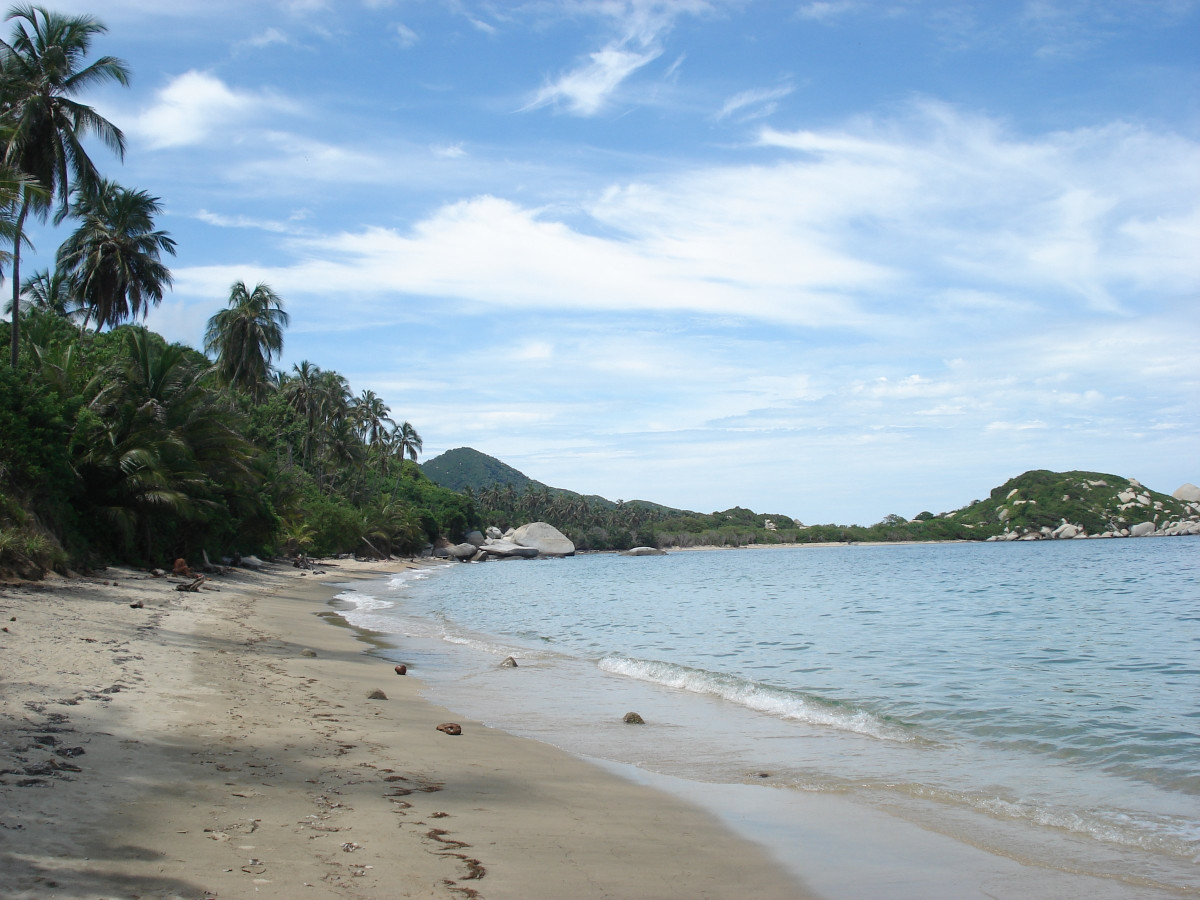
Here the name does not exaggerate. In front of the shore a barrier of rocks breaks the waves before they arrive, and inside there is a sheet of still water where you can swim and snorkel without the sea moving you around. It sits on the trail from Arrecifes to Cabo San Juan, so it catches you on the way.
If you are going with children or do not feel very sure in open water, this is your beach. And if you are heading to the Cabo, it is the perfect excuse to split the walk in two, have a swim and continue. Arrive early. Each sector of the park has a daily visitor cap and between December and January it fills up fast.
3. Playa Cristal, Tayrona Park
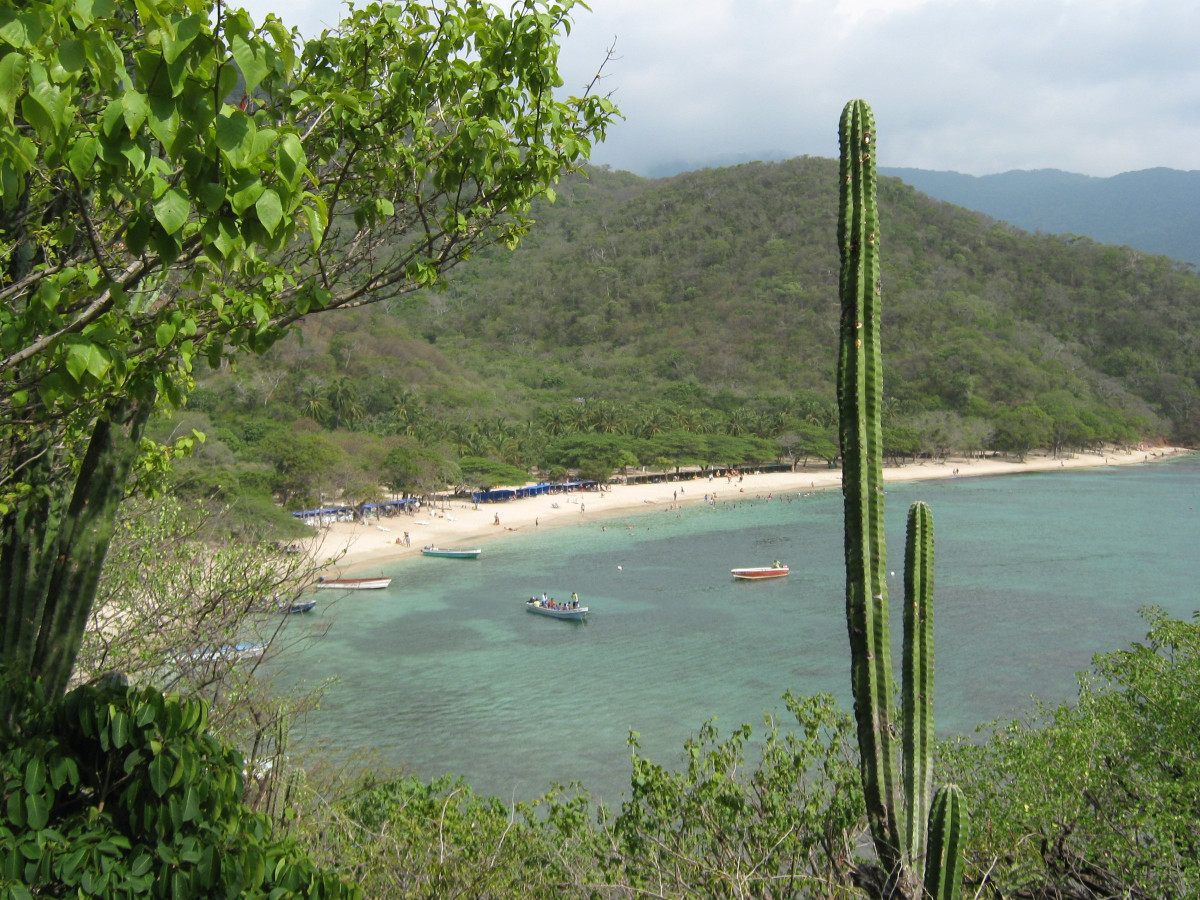
What defines Playa Cristal is the water: so clear that from the boat you already see the bottom, which is why it is the favorite for snorkeling in the whole park. You only get there by sea. First you go to the Palangana sector, at kilometer 5 of the Troncal del Caribe toward Riohacha (before the toll), and from there you take the boat. Through that same sector you enter Gayraca and Neguanje, and by boat also Playa del Muerto.
It is a day trip, because there is nowhere to sleep. There is a restaurant and you can swim and freedive. If you have your own mask, bring it. Use sunscreen that does not harm the coral and do not step on or touch the reef, which is damaged by very little.
4. Bahía Concha, Tayrona Park
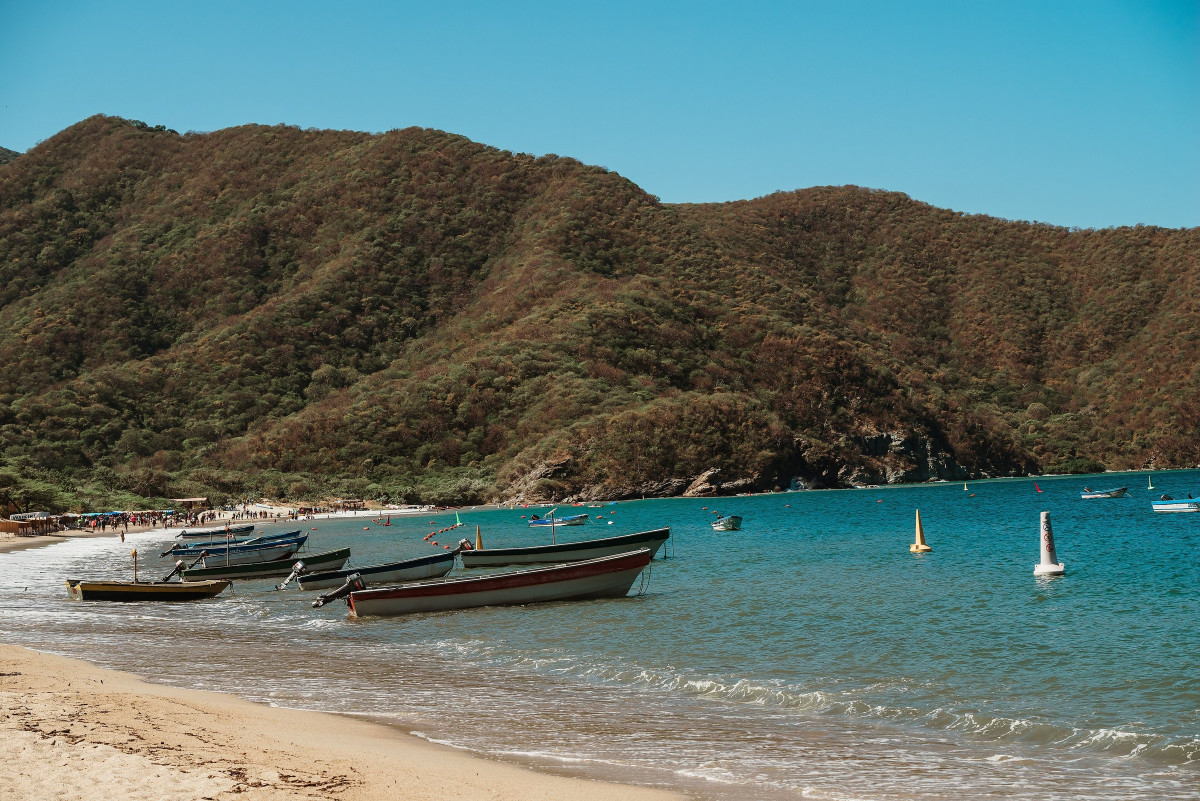
Do you have only one day and zero appetite for walking hours? Bahía Concha is the answer. It is the Tayrona beach closest to the city. You cross the Bastidas and Altos de Bahía Concha neighborhoods, spend about 15 minutes on an unpaved road to the gate and from there it is 20 minutes on foot to the main beach.
The bay is wide and surrounded by dry-forest hills. It also has mangrove, something only four beaches in the park have. You can swim and dive, with or without gear, there is basic rental and a restaurant. From the shore, boats leave for Waikiki and Bonito Gordo.
It has its own fee, the same all year. Entry is from 7:00 a.m. to 2:00 p.m. in high season and until 3:00 p.m. in low season, so do not leave it for after lunch.
5. Playa Grande, Taganga
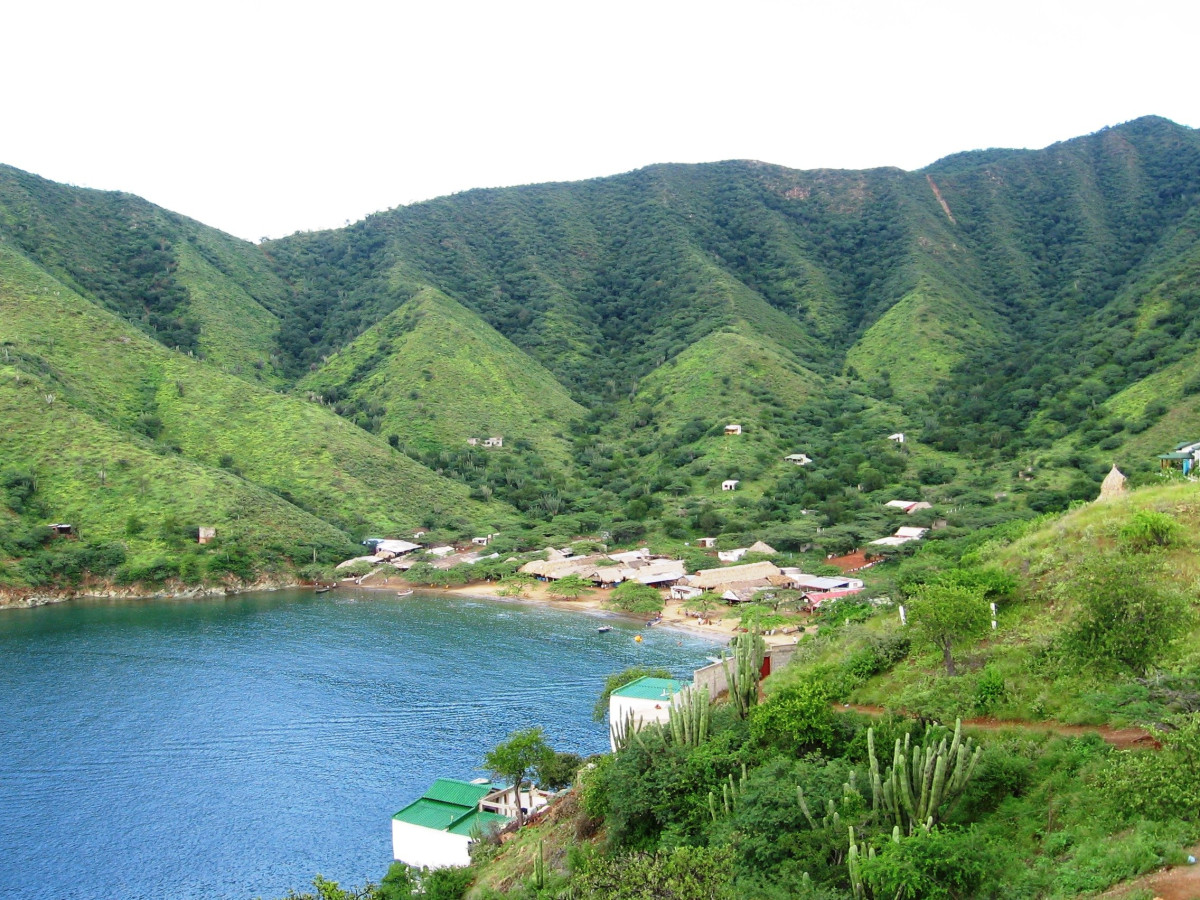
Taganga is a fishing village 15 or 20 minutes from downtown Santa Marta. From its beach a boat leaves that in about five minutes drops you at Playa Grande, a cove of pale sand tucked between mountains. If you prefer to walk, there is a trail of about ten minutes. To reach Taganga without a car, buses leave from calle 5 at carrera 20, downtown.
The plan here is simple: snorkel for a while on the nearby reefs and sit down to lunch on fried fish with coconut rice and patacón at one of the beach restaurants. An afternoon is enough and you will not spend much. Bring cash, because not everyone takes cards, and listen to the coast guard if they ask you to get out of the water.
6. Playa Blanca, Santa Marta
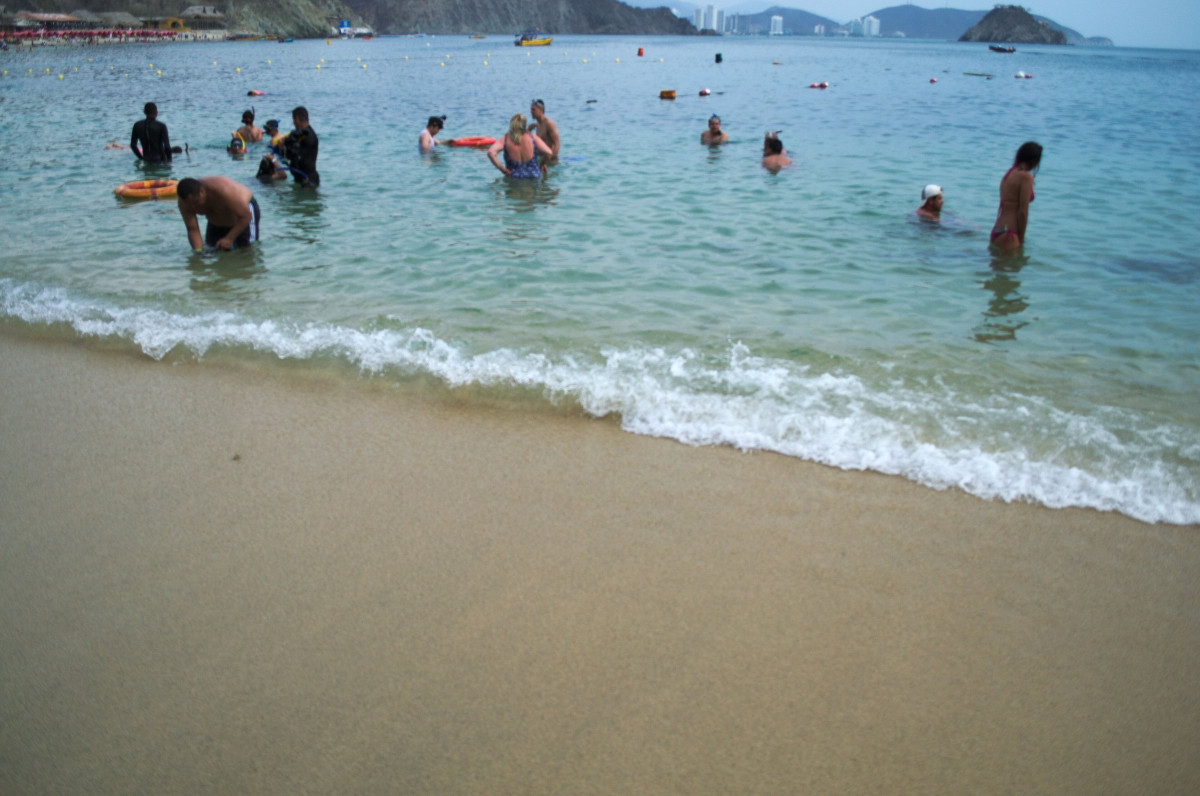
If you are staying in El Rodadero and want cleaner water without going all the way to Tayrona, the obvious way out is Playa Blanca. It is a cove north of the resort, about 15 minutes by boat, although you can also arrive on foot on a trail that skirts the hill.
There are about two kilometers of pale sand with warm water and no strong swell, and children can swim without your heart in your mouth. There are tents, seafood kiosks, snorkeling, jet skis and even a canopy line. One important detail: do not swim where the boats dock, because they come and go all day.
7. El Rodadero
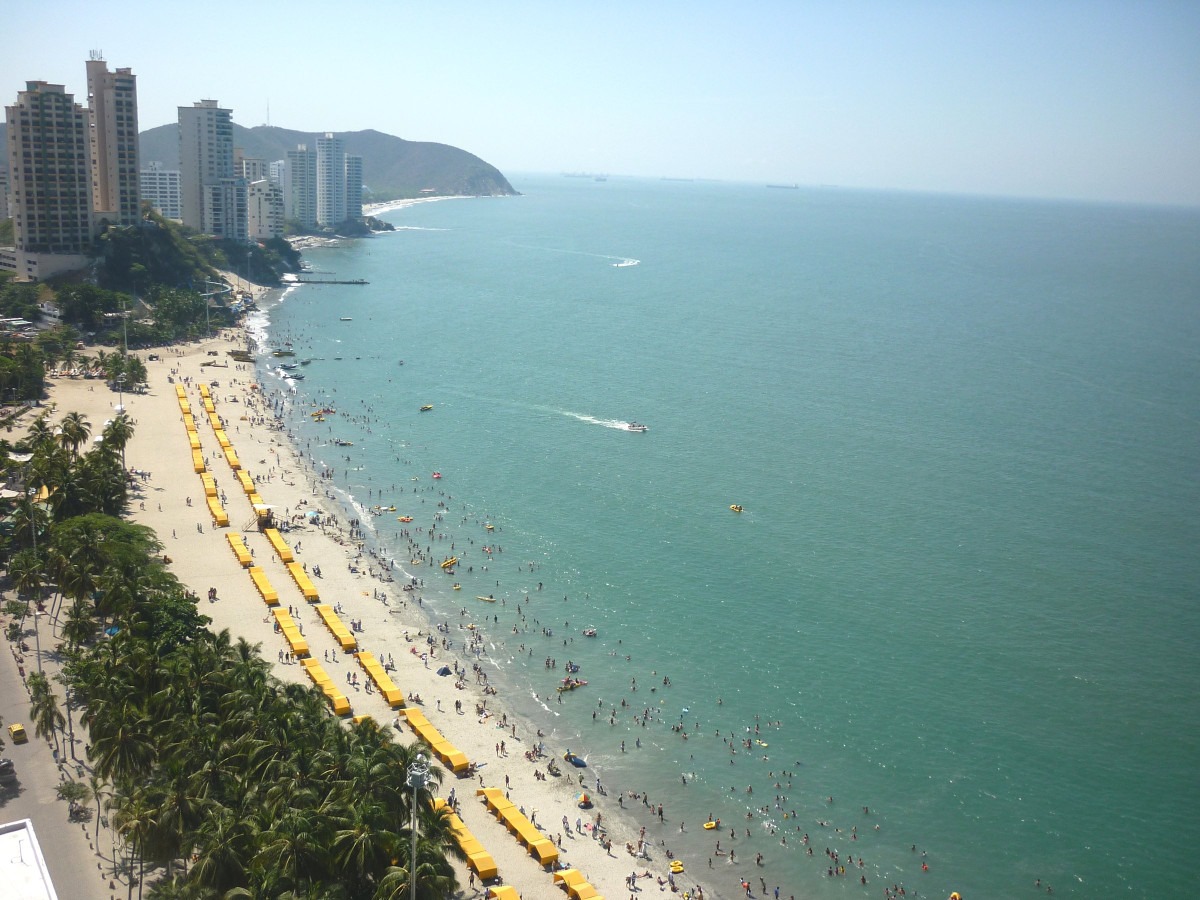
Let’s be honest: El Rodadero is not the prettiest beach on this list. But it is the most practical. It is Santa Marta’s urban resort, in the cove of Gaira, south of downtown and separated from the bay by Cerro Ziruma. It began to be built in 1954, when they opened the road that is now Avenida Hernández Pardo, and since then the pale sand has lived alongside tall buildings, hotels, restaurants and shops.
The good part is that everything is a walk away: food, nightlife and the boats that leave for Playa Blanca and Tayrona. For a family that does not want to organize transport every morning, it is a good base. Watch the flags and swim only in the marked areas.