
Coffee Region, Colombia: a trip among mountains, towns and aromas that stay with you
Find out what to do in the Coffee Region, Colombia: colorful towns, coffee farms, the Cocora Valley, hot springs and tips to prepare an unforgettable trip.
There are trips you remember for the photographs. Others stay with you because of what they made you feel.
Visiting the Coffee Region, Colombia, is waking up in front of mountains covered in green, listening to the rain fall on the coffee groves and discovering that a cup of coffee can hold the story of an entire family.
You do not come here only to learn how Colombian coffee is grown. You come to walk among palms that seem to touch the clouds, wander through towns full of colorful balconies, rest in hot springs and let the local hospitality make you feel at home.
Without rushing. Without empty itineraries. With time to enjoy.
Where is the Coffee Region, Colombia?
The Coffee Region is located in the Andean region of Colombia and mainly comprises the departments of Caldas, Risaralda and Quindío, whose capitals are Manizales, Pereira and Armenia.
There are also municipalities in the north of Valle del Cauca linked to the Coffee Cultural Landscape. It is not a single city: it is a region of mountains, farms, nature reserves and towns that keep a deep relationship with coffee.
In 2011, UNESCO declared the Coffee Cultural Landscape of Colombia a World Heritage Site. The recognition highlights the tradition of its small family farms, the adaptation of the crops to mountainous terrain and the identity that several generations built around coffee.
Why visit the Coffee Region, Colombia
Because here you can return to what is essential.
Imagine starting the morning with a cup of freshly prepared coffee while the mist lifts slowly over the mountains. Later, you walk a trail surrounded by nature and end the day talking in a square full of life.
The Coffee Region, Colombia, is ideal if you want to connect with nature, discover coffee culture from its origin and combine adventure, rest and food in a single trip.
You are not paying only to visit a farm or walk through a valley. You are investing in the chance to stop, breathe and go home with a different story.
What to do in the Coffee Region, Colombia
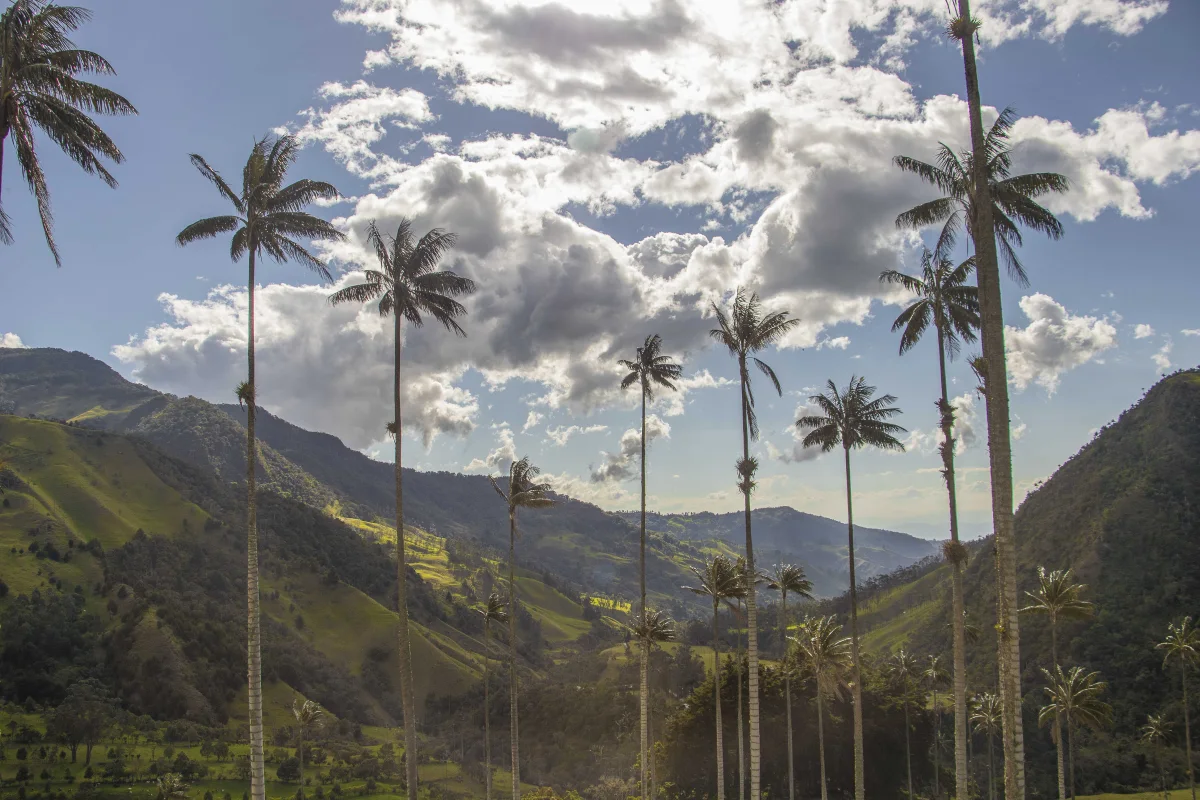
Walk among wax palms in the Cocora Valley, Salento, Colombia
The Cocora Valley is located in Salento, Quindío, Colombia, about 25 kilometers from Armenia, Colombia.
The experience begins before you arrive. From the main square of Salento, Colombia, the traditional Jeep Willys leave and follow the mountain road to the valley.
Then the scene you were probably imagining appears: green trails, low clouds and wax palms rising over the landscape. Some can reach nearly 60 meters in height. It is not strange to feel small in front of them.
You can take a short walk, choose a more demanding route or ride through some sections on horseback. The ground can get wet and slippery, especially after rain.
Ideal for: couples, families, photography lovers and travelers who enjoy hiking.
Traveler tip: leave early from Salento, Colombia. You will find more pleasant temperatures, fewer visitors and a better chance of seeing the valley clear.
Walk the streets of Salento, Colombia
Salento, Quindío, Colombia, is one of the best-known towns in the Coffee Region. Its colorful facades, wooden balconies and streets full of cafés create a cheerful, traditional atmosphere.
You can walk Calle Real, climb to the Alto de la Cruz lookout and from there look at the mountains that surround the town. But Salento, Colombia, is not understood only by looking at its houses. You have to sit in the square, order a coffee and watch the movement of the Willys, the travelers and the local families.
Without rushing. The town is enjoyed on foot.
Local tip: try the trout with patacón, one of the most popular dishes in this part of Quindío, Colombia.
Live a coffee experience in Armenia, Pereira or Manizales, Colombia
Drinking coffee is everyday. Learning everything that happens before it reaches the cup changes the experience completely.
In the rural areas of Armenia, Quindío, Colombia; Pereira, Risaralda, Colombia; and Manizales, Caldas, Colombia, you will find farms where you can learn about the growing, harvesting, drying, roasting and preparation of coffee.
Some visits are short and educational. Others let you walk among the crops, talk with producers, take part in the harvest in season and finish with a guided tasting.
Local experts' tip: ask who grew the coffee you are going to taste. Meeting the person behind the cup turns a tasting into a human experience.
Discover Filandia, Colombia, at a slower pace
Filandia, Quindío, Colombia, keeps the region's colorful architecture and offers wide views over the coffee landscape.
You can walk its streets, visit artisans' workshops, drop into specialty cafés and sit in the main square without having to follow a program. Its location lets you visit it during the day from Armenia, Pereira or Salento, Colombia.
Filandia is for looking slowly. For talking. For enjoying an afternoon that does not need too many plans.
Traveler tip: do not limit yourself to the main square. Walk a few more streets and look for the small workshops and businesses run by people from the town.
Rest in the hot springs of Santa Rosa de Cabal, Colombia
After walking in the mountains, few sensations feel as comforting as stepping into a hot-spring pool surrounded by vegetation.
Santa Rosa de Cabal, Risaralda, Colombia, is known for its hot-spring complexes and waterfalls. You will find options for spending the day, enjoying a night of rest or combining the pools with walks in the forest.
Here the plan is not to do more. It is to stop.
Warm water. Fresh air. Mountains around you.
Traveler tip: if you can, visit the hot springs on a weekday. They usually receive more visitors on weekends and public holidays.
Get to know Pereira, Colombia
Pereira, Risaralda, Colombia, is a strategic base for exploring different points of the Coffee Region. The city combines services, restaurants and nightlife with access to coffee farms, nature reserves and nearby municipalities.
From Pereira, Colombia, you can arrange visits to Santa Rosa de Cabal, Filandia, Salento and other parts of the region. It is a good choice if you want to return each night to a city with a wide offer of lodging and food.
Explore Armenia and the towns of Quindío, Colombia
Armenia, Quindío, Colombia, is another convenient starting point for getting to know the south of the Coffee Region.
From the city you can travel to Salento, Filandia, Montenegro, Quimbaya, Calarcá and Buenavista, all in Colombia. Armenia offers a connection with theme parks, coffee farms and rural lodgings.
You can use it as a base or sleep at a farm in the surroundings if you want to wake up completely surrounded by nature.
Feel the mountain from Manizales, Colombia
Built among slopes, Manizales, Caldas, Colombia, offers a particular mix of city, coffee culture and high-mountain landscapes.
From its lookouts you can understand the geography of the Coffee Region: houses set on hillsides, roads that wind around mountains and crops that appear even on steep ground.
Manizales, Colombia, also works as a gateway to the northern sector of Los Nevados National Natural Park, Colombia.
Venture into Los Nevados National Natural Park, Colombia
Los Nevados National Natural Park, Colombia, stretches across sectors of Caldas, Risaralda, Quindío and Tolima. Its ecosystems include high Andean forest, páramo, wetlands, glaciers and volcanoes.
Here the adventure demands preparation. The altitude, the cold and the changes in weather can affect even travelers who are in good shape.
Entry must be made with an authorized operating agency or an ecotourism guide. Each sector has its own requirements, age limits, hours and conditions, and the park does not provide transportation to its attractions.
What you should know before booking: check the status of the sector you want to visit directly with Parques Nacionales Naturales de Colombia. Closures, open routes and access conditions can change.
How to choose your experience in the Coffee Region, Colombia
If you are traveling as a couple
Combine a coffee farm with Filandia, Colombia, and a night at the hot springs of Santa Rosa de Cabal, Colombia. You will have nature, rest and time to talk without watching the clock.
If you are traveling as a family
Choose Armenia, Colombia, as a base and combine coffee activities, towns in Quindío and attractions suited to the children's ages. Always confirm the restrictions before booking hikes or mountain experiences.
If you are traveling with friends
Pereira, Colombia, lets you combine day trips with restaurants and entertainment at night. Add Salento, Colombia, the Cocora Valley and a day at the hot springs.
If you are looking for adventure
Include hiking in the Cocora Valley, walks through nature reserves and an authorized experience in Los Nevados National Natural Park, Colombia. The right preparation and accompaniment are part of the adventure.
If you want to rest
Book a rural lodging, visit a farm without rushing and devote a day to Santa Rosa de Cabal, Colombia. You do not need to see ten places to feel that you made the most of the trip.
Your trip, your way.
How many days you need to get to know the Coffee Region, Colombia
For a first visit, the recommended time is between four and seven days.
A balanced five-day route could include:
- Arrival in Pereira or Armenia, Colombia, and transfer to the lodging.
- A visit to Salento and the Cocora Valley, Colombia.
- An experience at a coffee farm in Quindío or Risaralda, Colombia.
- A walk through Filandia, Colombia.
- Rest at the hot springs of Santa Rosa de Cabal, Colombia.
If you have a week, you can add Manizales, Colombia, other coffee towns or a nature experience in greater depth.
Do not try to cover the whole region in two days. Distances can look short on the map, but mountain roads and unexpected stops are part of the trip.
Prepare your trip to the Coffee Region, Colombia
How to get there
The main air access points are Matecaña International Airport, in Pereira, Colombia; El Edén International Airport, near Armenia, Colombia; and La Nubia Airport, in Manizales, Colombia.
You can also arrive by road from Bogotá, Medellín, Cali and other cities in Colombia. Before you travel, check the schedules, the available routes and the condition of the roads.
How to get around
You can use intermunicipal transport, private transfers, a rental car or excursions with transportation included. If you want to visit several towns in a few days, an organized transfer can save you waits and connections. If you prefer to travel slowly, local buses offer more flexibility.
On rural roads, times can vary because of rain, roadwork or the condition of the terrain.
When to travel
The Coffee Region, Colombia, can be visited year-round. Its landscape stays green thanks to a humid, changing climate.
Rather than looking for a guarantee of completely dry days, it is better to be ready for sun and rain in the same day. The busiest seasons usually coincide with holidays, Holy Week, mid-year and the end of the year.
If you are looking for more calm, consider traveling on weekdays and outside Colombia's public holidays.
What to bring
- A light waterproof jacket.
- Shoes with good grip.
- Sunscreen and insect repellent.
- A hat or cap.
- A reusable bottle.
- Comfortable clothes for different temperatures.
- A warm layer for the high areas.
- A small backpack for excursions.
- Some cash for rural areas.
The weather changes. Your luggage should keep up.
The Coffee Region, Colombia, is not only visited: it is felt
Maybe you will come back remembering the height of the palms in the Cocora Valley. Perhaps it will be the hot water of the springs, a conversation with a coffee-growing family or the silence of a morning in the mountains.
That is what is special about this region: the best memory is not always on the itinerary.
You are not only planning a vacation in the Coffee Region, Colombia. You are choosing to stop, connect with the land and go home with a story that smells of freshly prepared coffee.
Choose your route, pack your bag and let the mountains do the rest.
Official sources
- Coffee Cultural Landscape of Colombia — UNESCO.
- Colombian Western Andes — Colombia Travel.
- Cocora Valley — Colombia Travel.
- Los Nevados National Natural Park — Parques Nacionales Naturales de Colombia.
Coffee Region guides
Our verified Coffee Region lists for 2026. Each one explains when we checked the facts and what to confirm before you book.