
What to do in Barichara: the 7 best activities
Seven plans in Barichara: walk the Camino Real to Guane, stroll Calle Real, go into the church of the Immaculate Conception, climb to Santa Bárbara and the Parque de las Artes, visit Guane and see the stone cemetery.
1. Walk the Camino Real to Guane
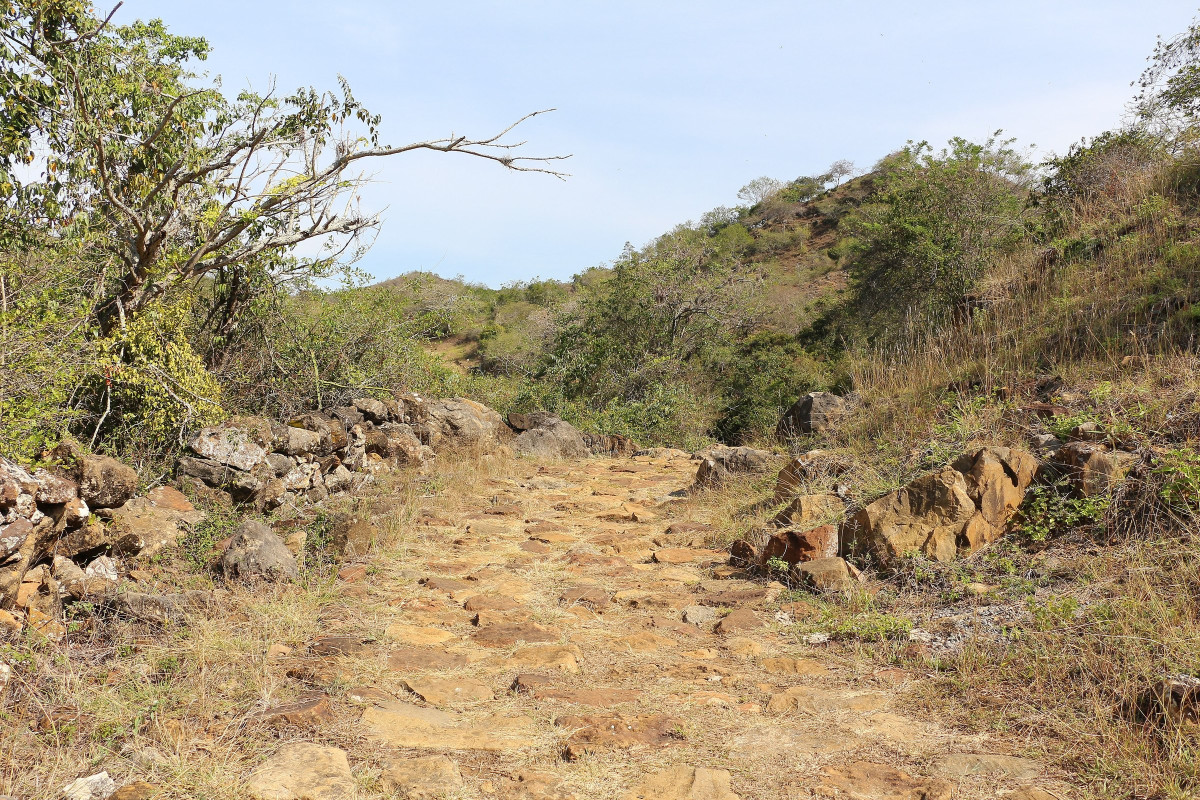
If you do only one thing in Barichara, make it the walk down the Camino Real to Guane. It is about 5.5 kilometers of stone slabs downhill, with the Suárez River canyon opening to one side, and it takes two hours or a little more. The rest of the town is explored on foot, with no rush: Calle Real and the church of the Immaculate Conception on the main square, and at the other end the chapel of Santa Bárbara and the Parque de las Artes, the best lookout over the historic center.
| Plan | Where | Works well for |
|---|---|---|
| Camino Real to Guane | Starts from the upper part of town | Walkers; early morning |
| Calle Real and the main square | Carrera 7, historic center | First walk and photos |
| Church of the Immaculate Conception | Facing the main square | Stone architecture |
| Chapel of Santa Bárbara | Calle 6 with carrera 12 | Sunset |
| Parque de las Artes | Next to Santa Bárbara | Sculptures and the canyon view |
| Guane | 9 km from Barichara | Guane history and fossils |
| Cemetery and chapel of Jesús Resucitado | Calle 2 with carrera 8 | Stone carving |
What to do in Barichara in two days
Barichara is in Santander, 21 kilometers from San Gil and 1,300 meters above sea level. The climate is hot and dry, and the town's yellow stone throws the heat back at midday. Its historic center has been a National Monument since 1978 and is part of the Heritage Towns Network. Two nights are enough for everything that follows. The adventure plans from San Gil, such as rafting or paragliding, are not here because they sit outside the town and deserve a note of their own.
To choose where to sleep, see the best hotels in Barichara. And if you continue on to Boyacá, we have what to do in Villa de Leyva and the best hotels in Villa de Leyva.
The Camino Real to Guane, the first thing to do in Barichara
The Guane people laid it out, it stayed in use through the colonial period, and around 1860 the German Geo von Lengerke turned it into a trade route. In 1977 it was declared a National Monument. You walk on flat stone slabs (look closely: some have fossils) between fences of the same material, built without a drop of mortar.
It starts in the upper part of town, near the chapel of Jesús Resucitado, and drops about 5.5 kilometers along the Suárez River canyon. Figure on an hour and a half to two and a half hours, depending on your pace. Along the way there are little shops where you can sit for a while, and you will cross paths with farmers and goats. Leave early or as the afternoon is falling, because the sun hits hard, and bring water, a cap, sunscreen and shoes with grip. You don't have to walk back up: Guane and Barichara are linked by a 9-kilometer paved road.
2. Walk Calle Real and the main square
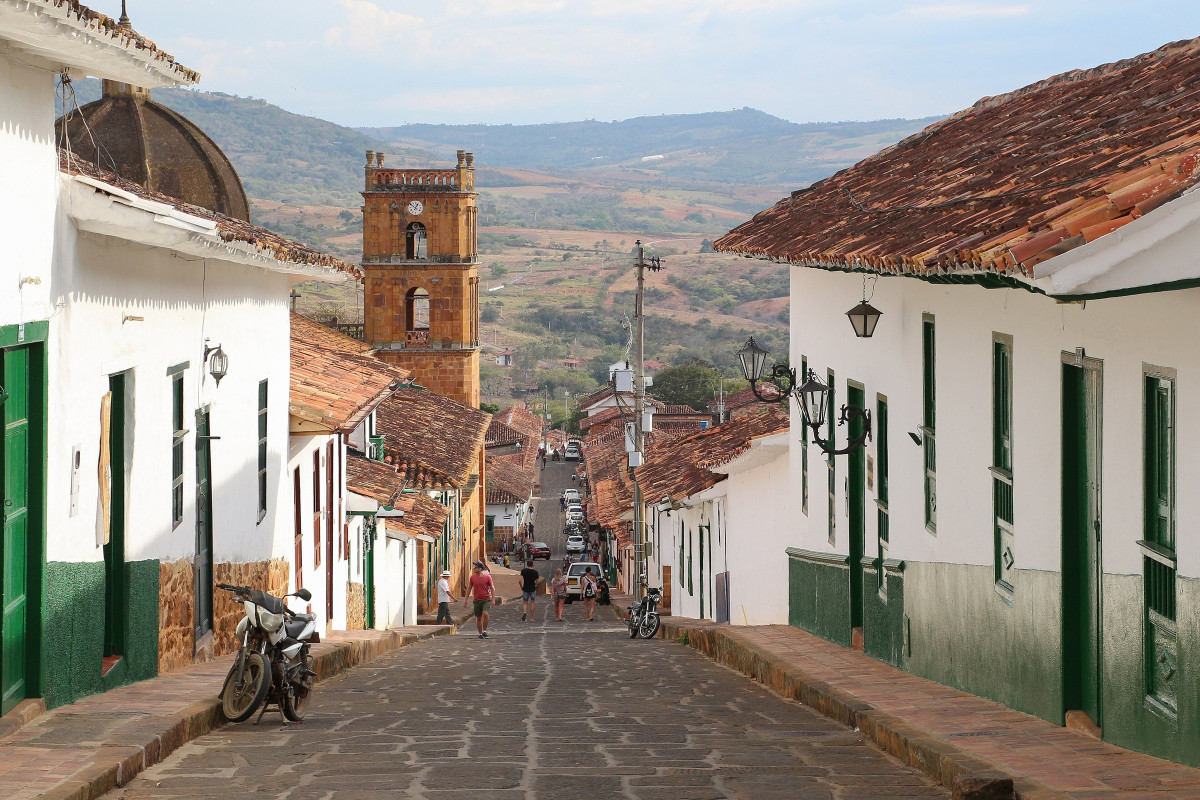
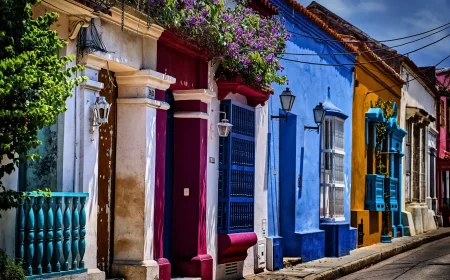
Carrera 7, Calle Real, is the spine of the historic center. Sandstone paving, white façades with colored plinths, wooden doors and balconies. It runs from the main square toward the chapel of Santa Bárbara, and along the way you find galleries, craft shops, cafés and restored manor houses.
Save it for the first afternoon, when the light drops and the stone turns gold. And duck into the side streets. Barichara was declared a national monument for its late-eighteenth-century urban layout, and that is something you enjoy by walking, not by hunting for a single photo.
3. Go inside the church of the Immaculate Conception
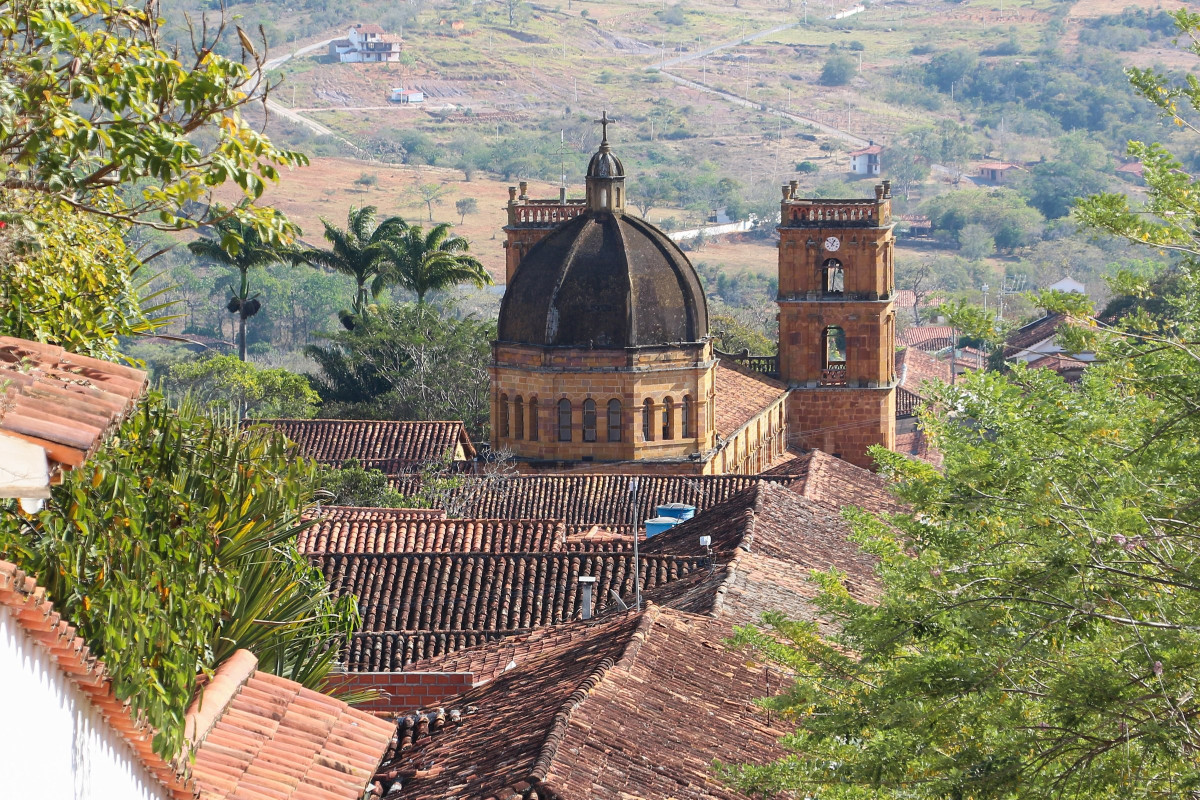
Facing the main square is the town's most important building, dedicated to the Immaculate Conception and to Saint Lawrence the Martyr. Many people call it a cathedral, although it is not a bishop's seat. They began raising it in sandstone in the second half of the eighteenth century, and the façade changes through the day: yellow in the morning and ochre at sunset.
When you go in, look up. Ten single-piece columns, about five meters high, hold up the naves. The church is tied to the legend that gave rise to the town, of an image of the Virgin that appeared on a stone in 1702. If there is a Mass, wait until it ends before walking around.
4. Watch the sunset at the chapel of Santa Bárbara
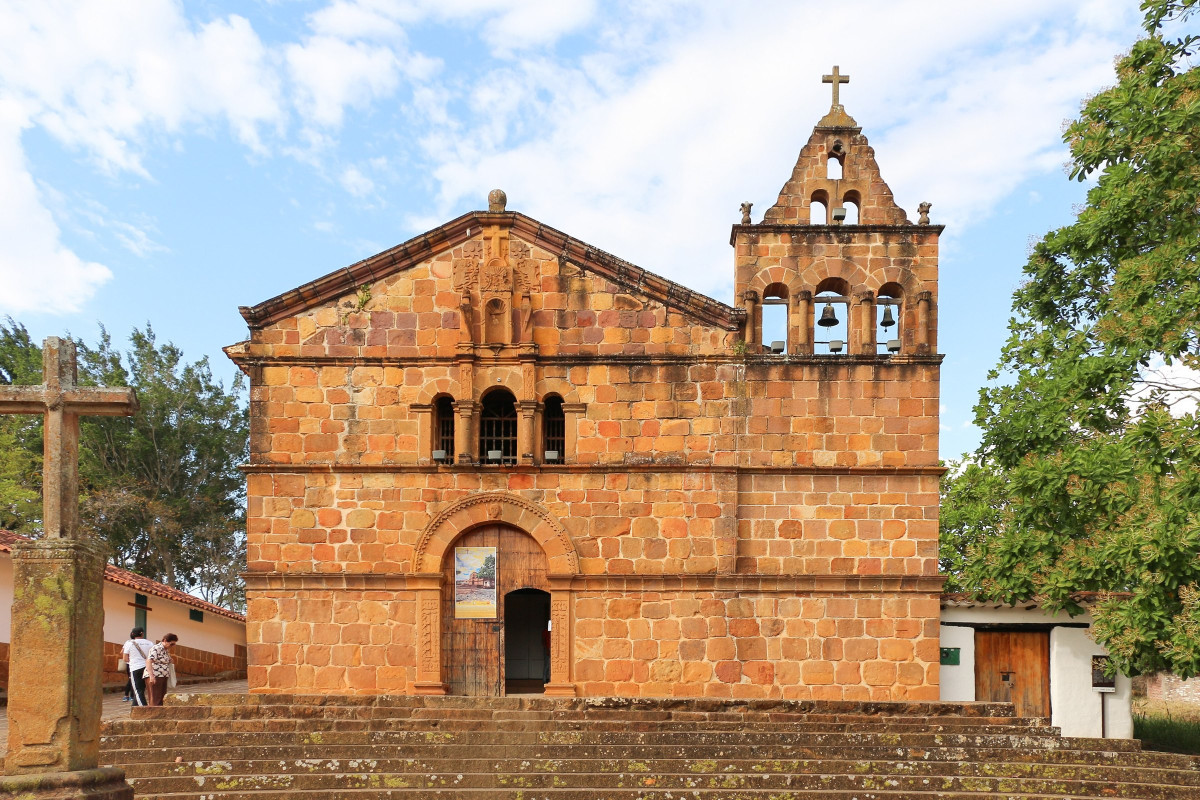
On a small rise at one end of town, at calle 6 with carrera 12, stands the chapel of Santa Bárbara. Work on it began around 1831, in sandstone and adobe. The façade is simple, with a bell gable and a wide atrium.
At sunset the atrium fills up, and with good reason. From there you see the town's roofs and the Suárez River valley turning orange. If you happen to be there on December 4, Santa Bárbara's day, you will find a religious and neighborhood celebration. The Parque de las Artes starts right next to it.
5. Stroll through the Jorge Delgado Sierra Parque de las Artes
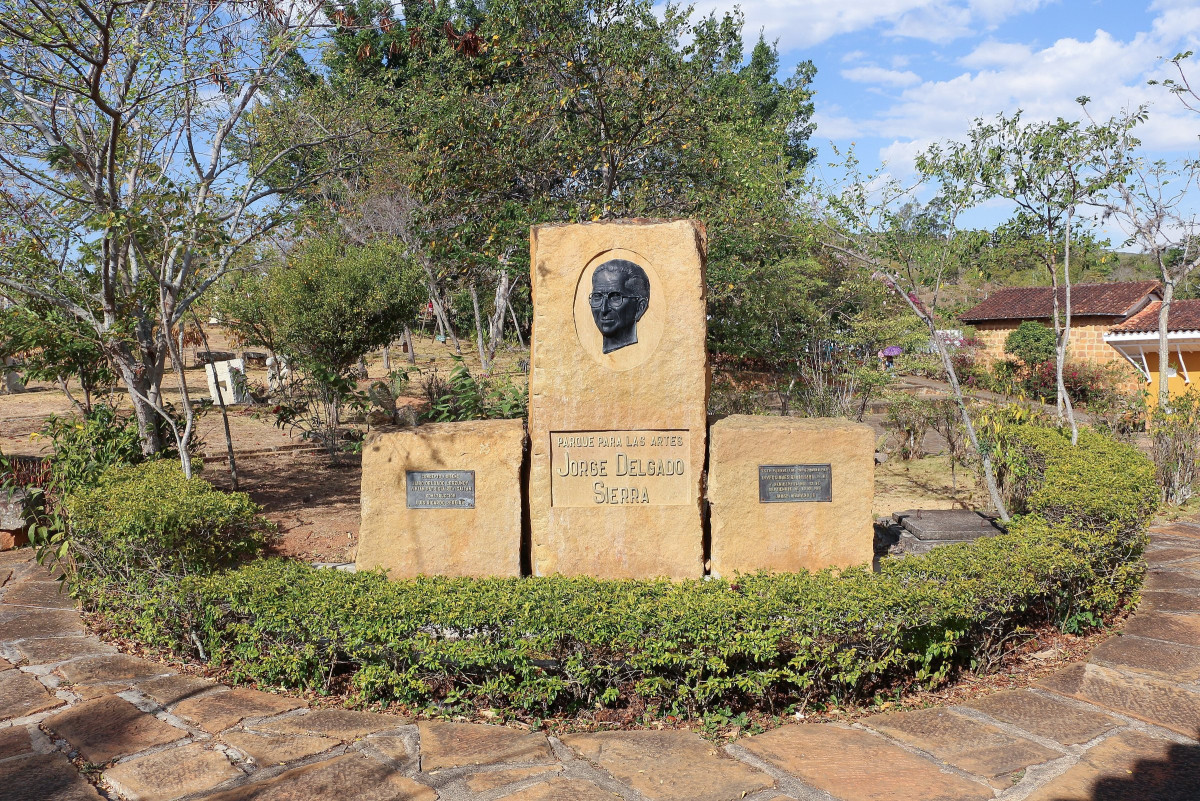
Next to Santa Bárbara there is an open-air park that opened in 1998 with the first International Symposium of Stone Sculpture. Twenty-two huge sculptures remained, carved from the local sandstone, among cobbled paths, gardens and reflecting pools.
But many people come more for the view than for the sculptures: it is one of the best lookouts over the Suárez River canyon. Between this park and Rafael Ortiz Prada park there is a walk of about 600 meters with the mountain range in front of you. Do it the same afternoon as Santa Bárbara and end the day there.
6. Visit Guane and its museum
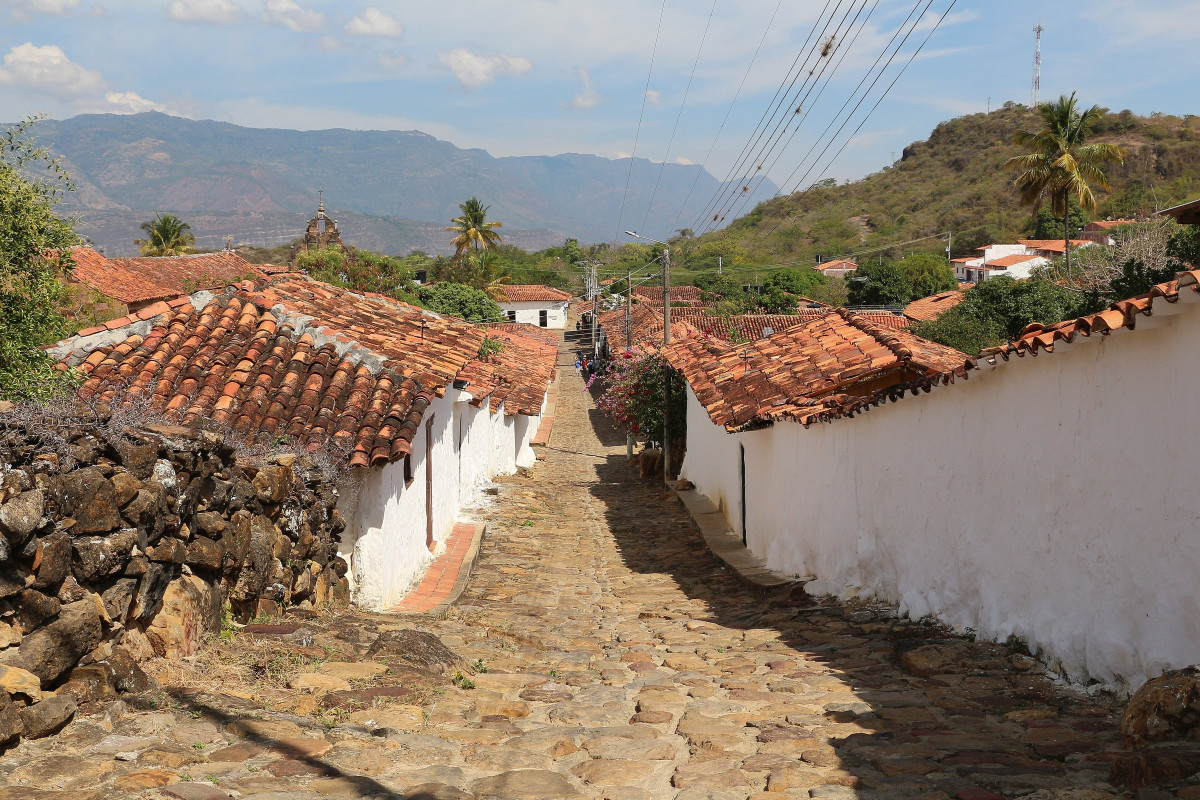
Guane is where the Camino Real ends, but it is worth it even if you don't walk the trail. It is 9 kilometers away by paved road. It was a municipality until 1888, and today it is a township of about a hundred single-story houses around the church of Santa Lucía, from 1786, with its plaza and cobbled streets.
The best thing in the village is the Paleontological and Archaeological Museum, founded by the priest and historian Isaías Ardila Díaz. It has more than 10,000 fossils, many of them marine animals, and a room with 215 pieces of Guane pottery. If you arrived on foot, the museum is the best place to catch your breath before going back to Barichara.
7. Visit the cemetery and the chapel of Jesús Resucitado
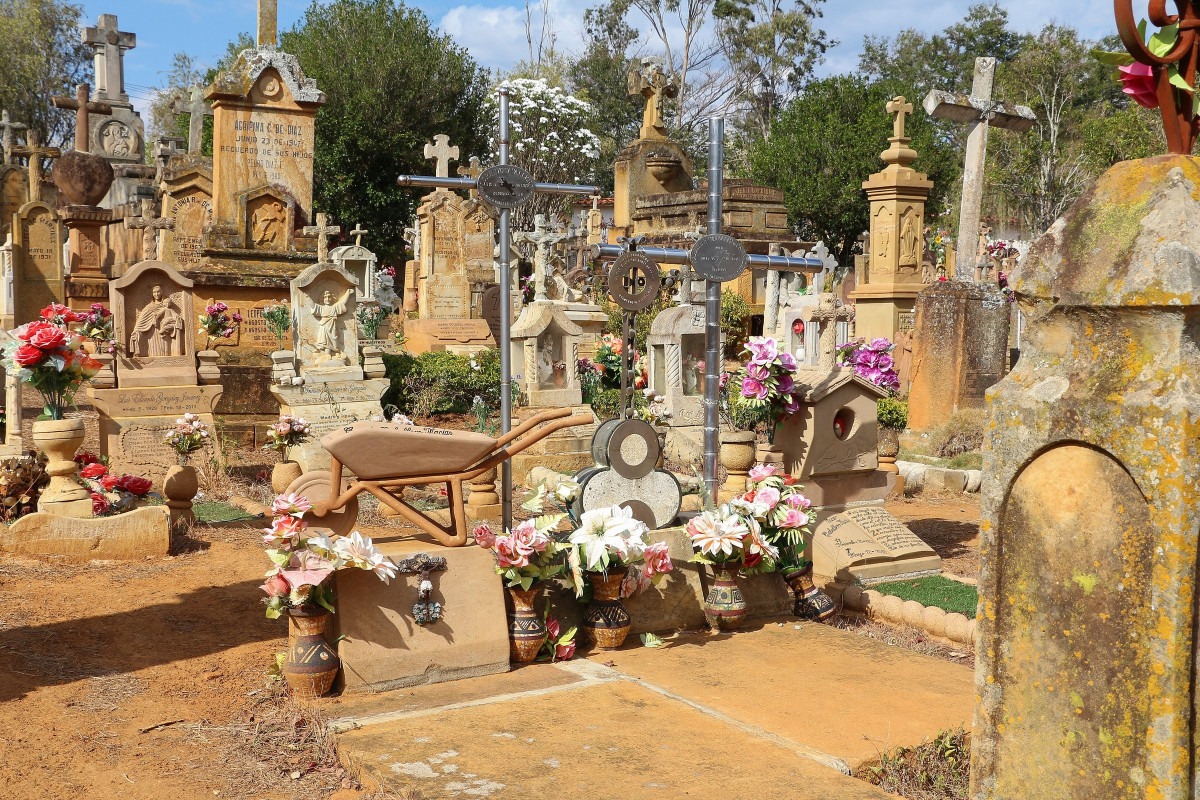
It sounds odd to recommend a cemetery, but Barichara's is among the most beautiful in Colombia. It is a few steps from the center. Walls, paths and vaults are made of the same yellow stone as the town, and the headstones, carved by local artisans, have striking detail. The color comes from the families, who fill the graves with ringlete paper flowers, blossoms and bright objects.
Forty meters away, at calle 2 with carrera 8, is the chapel of Jesús Resucitado. It was built in stone in the 1980s, when the Camino Real was restored, and the trail starts right there. It is a place of mourning: walk in silence and ask permission before photographing people who are visiting their dead.