
What to do in Barranquilla: the 6 best activities
Six plans in Barranquilla: Gran Malecón, the Carnival Museum, El Prado, Ventana al Mundo, the cathedral and Bocas de Ceniza, with hours and tips.
1. Walking the Gran Malecón along the river
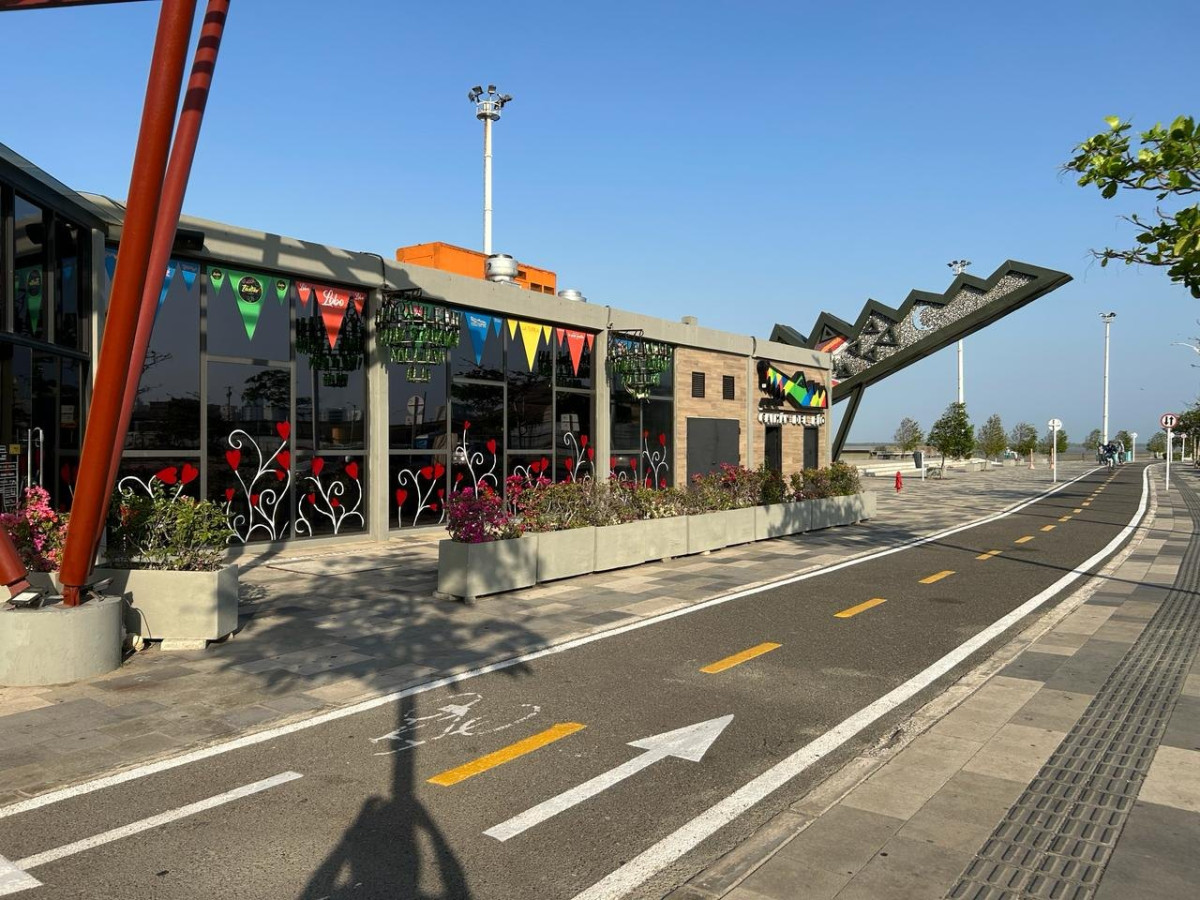
What to do in Barranquilla has two answers: the river and Carnival. Start with the Gran Malecón, five kilometers along the Magdalena with a bike path and the Caimán del Río food market, and continue to the Carnival Museum in Barrio Abajo, which is the way to understand the festival even if you arrive at another time of year.
Updated on November 24, 2026.
| Activity | Where | It works well if… | Official website |
|---|---|---|---|
| Walking the Gran Malecón | The Magdalena shore, from Puerta de Oro to Isla de la Loma | you want sunset, a bike and food | granmalecon.com |
| Carnival Museum | Barrio Abajo, Carrera 54 #49B-03 | the Carnival dates do not work for you | carnavaldebarranquilla.org |
| Walking El Prado | El Prado neighborhood | you like architecture | hotelelpradobarranquilla.com |
| Ventana al Mundo | Avenida Circunvalación, near Vía 40 | you are looking for the city’s photo | No site of its own |
| Metropolitan Cathedral | Plaza de la Paz | you are interested in modern religious art | No site of its own |
| Bocas de Ceniza | Where the Magdalena meets the sea | you want to see the river meet the Caribbean | No site of its own |
The city is not made to be walked from end to end: between the waterfront, El Prado and the cathedral you will move by taxi or by car. Do the outdoor plans early or at the end of the afternoon, when the breeze blows, and leave the museum and the cathedral for the hotter hours; even so, the museum closes from 12:00 to 2:00.
If you are looking for fashionable plans in the city, see these experiences in Barranquilla; and if you are going on along the coast, we have guides to Santa Marta and to Cartagena.
The Gran Malecón, where the city looks at the river
For decades Barranquilla turned its back on the Magdalena. The Gran Malecón changed that: the first stage opened on July 17, 2017 and today there are about five kilometers of shoreline between the Puerta de Oro events center and Isla de la Loma, with bike paths, green areas and the Pabellón de Cristal.
It is the most visited site in the city, and you understand why when you arrive. In the mid-afternoon the river breeze eases the heat, people go out to jog or to ride a bike and the terraces of Caimán del Río, the waterfront food market, start to fill. In 2023 the waterfront was certified as a sustainable tourist destination.
Go around 5 in the afternoon, walk toward the sunset and stay to eat at Caimán del Río. Bring a cap and water if you go earlier: in full sun, the shoreline does not forgive.
2. Understanding the festival at the Carnival Museum
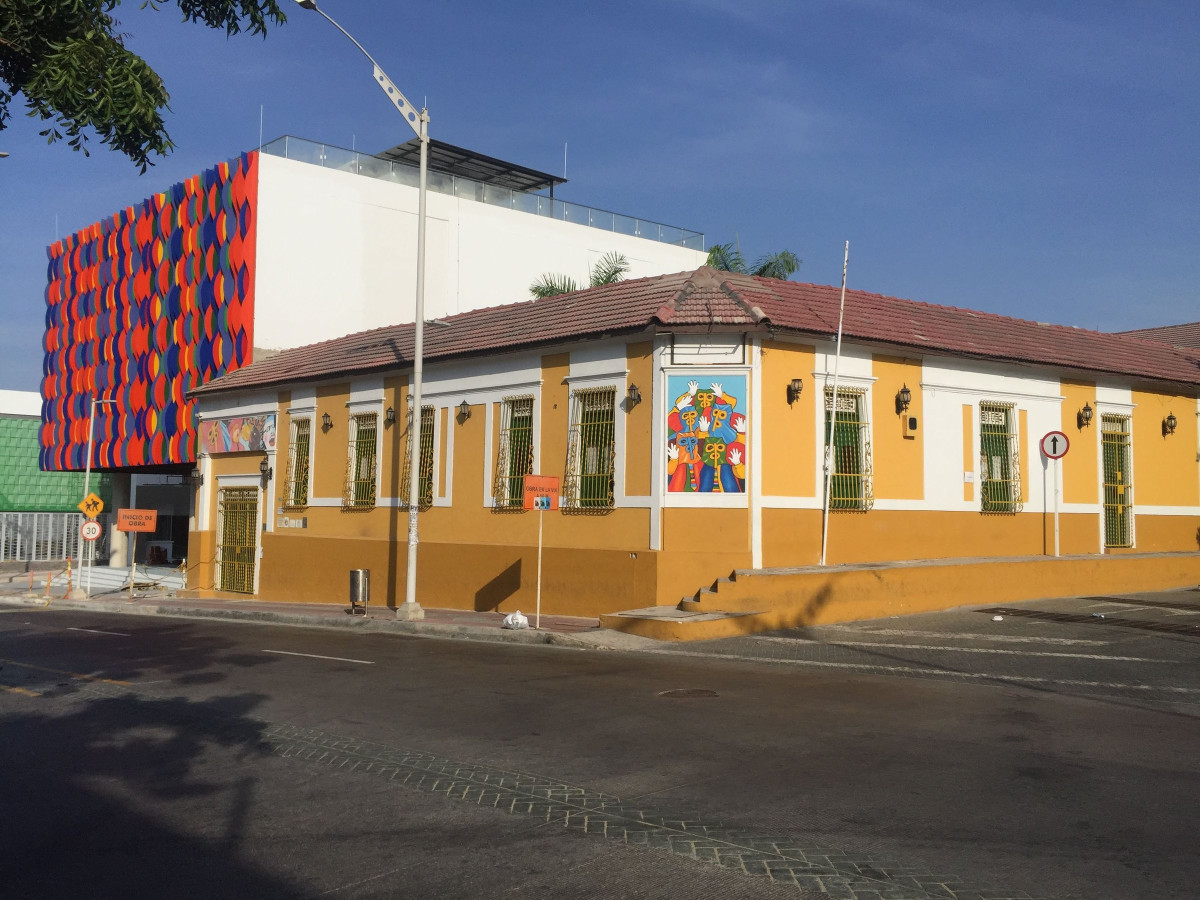
If you do not arrive for Carnival, which in 2026 was from March 1 to 4, this is the way to understand why the whole city lives pending those four days. The museum is next to the Casa del Carnaval, in Barrio Abajo, at Carrera 54 #49B-03, and it goes over the costumes, the dances and the music of the festival.
It is open Tuesday to Sunday, from 9:00 to 12:00 and from 2:00 to 4:00 in the afternoon, with entries every hour; the last is at 4:00 and Mondays it is closed. General admission costs $20,000 and for children under 10 and people over 65, $15,000.
Barrio Abajo is one of the neighborhoods with the most Carnival history in the city. After the museum, take a turn around its streets before you leave.
3. Walking the El Prado neighborhood
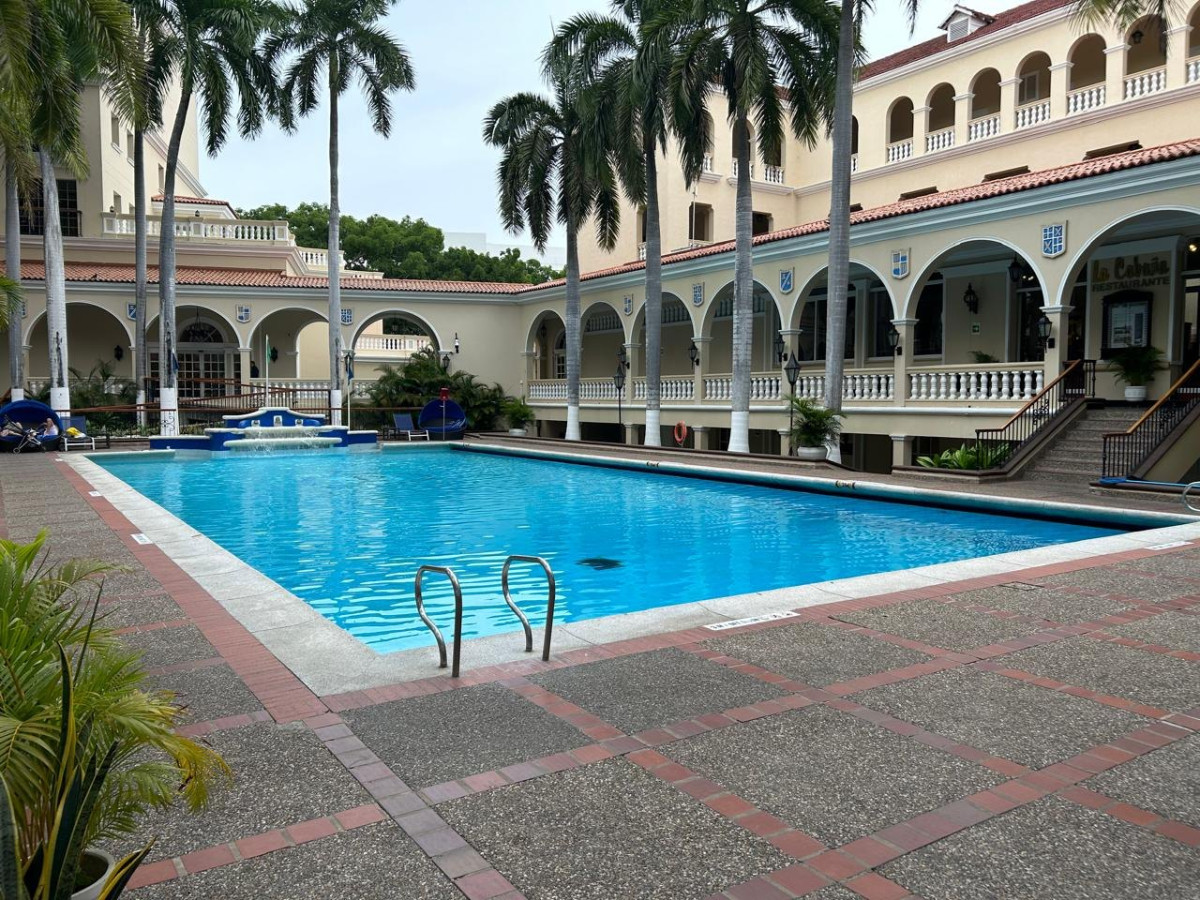
Houses from the twenties and a hotel from 1930
El Prado was born in 1920 as the country’s first planned urbanization, promoted by Karl C. Parrish. More than a hundred years later it is still the neighborhood of the manor houses with gardens, the porches and the tree-lined avenues, and the best display of how the city thought of itself when it was Colombia’s great port.
The emblem of the neighborhood is Hotel El Prado, inaugurated on February 15, 1930, with its white arcades, the palms and the pool in the center. Look into the lobby and, if you want to treat yourself, have a drink there.
Walk the neighborhood by car or by taxi at a slow pace and get out where a façade calls you. On foot, better early in the morning or at the end of the afternoon.
4. Photographing Ventana al Mundo
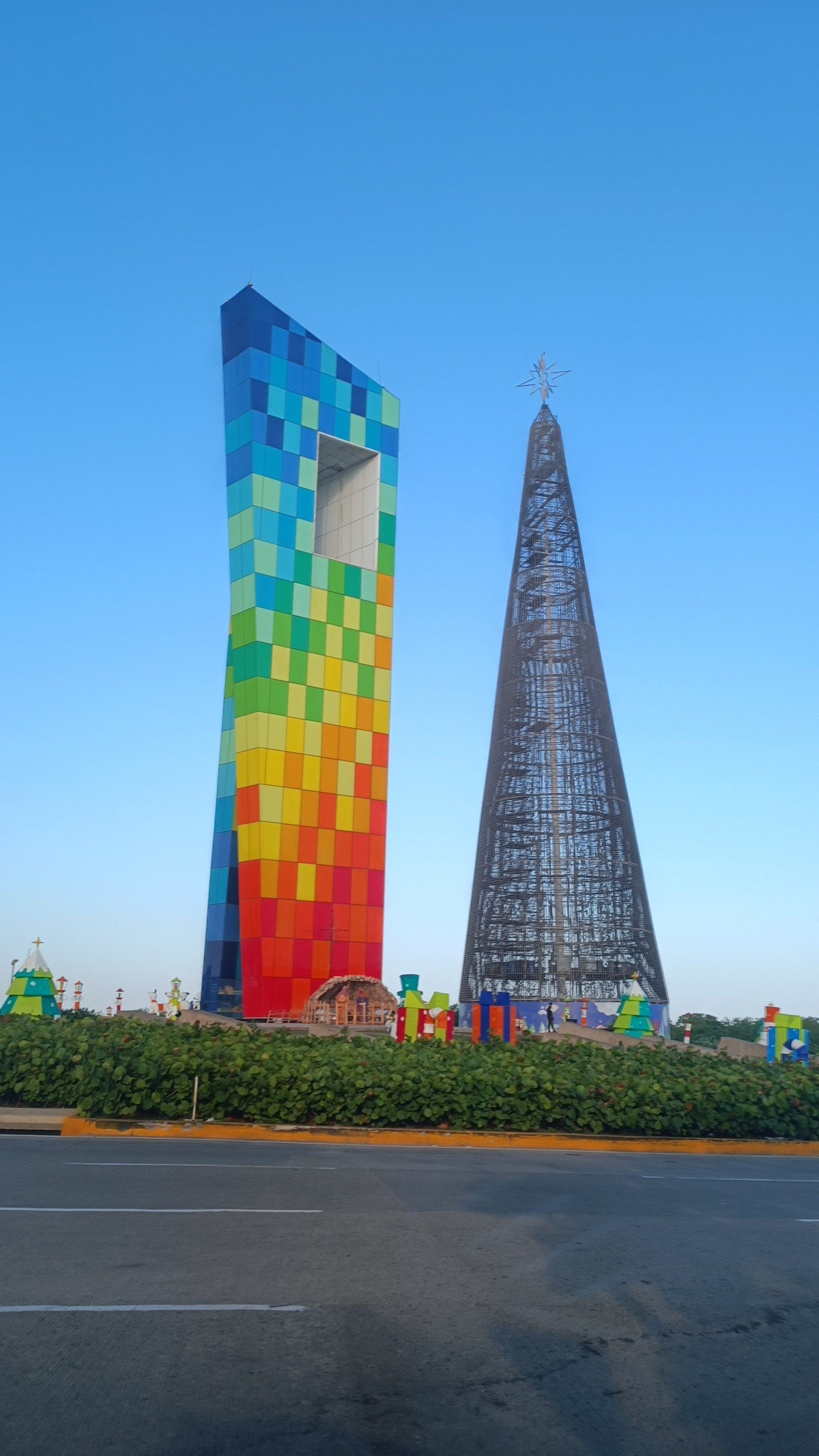
Ventana al Mundo went up at the end of 2018, for the Central American and Caribbean Games the city organized. It is an open tower of colored glass, designed by the architect Diana Escorcia Borelly at the initiative of Tecnoglass, and it can be seen from afar in a traffic circle on Avenida Circunvalación, near Vía 40.
What many people do not know is that on the inner faces of the bases, landmarks of the city’s history are engraved. It is worth stopping to read them before the photo.
Go with sun: the colors of the glass light up in direct light, and at the end of the afternoon the silhouette looks good against the sky. Be careful when you cross, because the traffic circle has fast traffic.
5. Going into the María Reina Metropolitan Cathedral
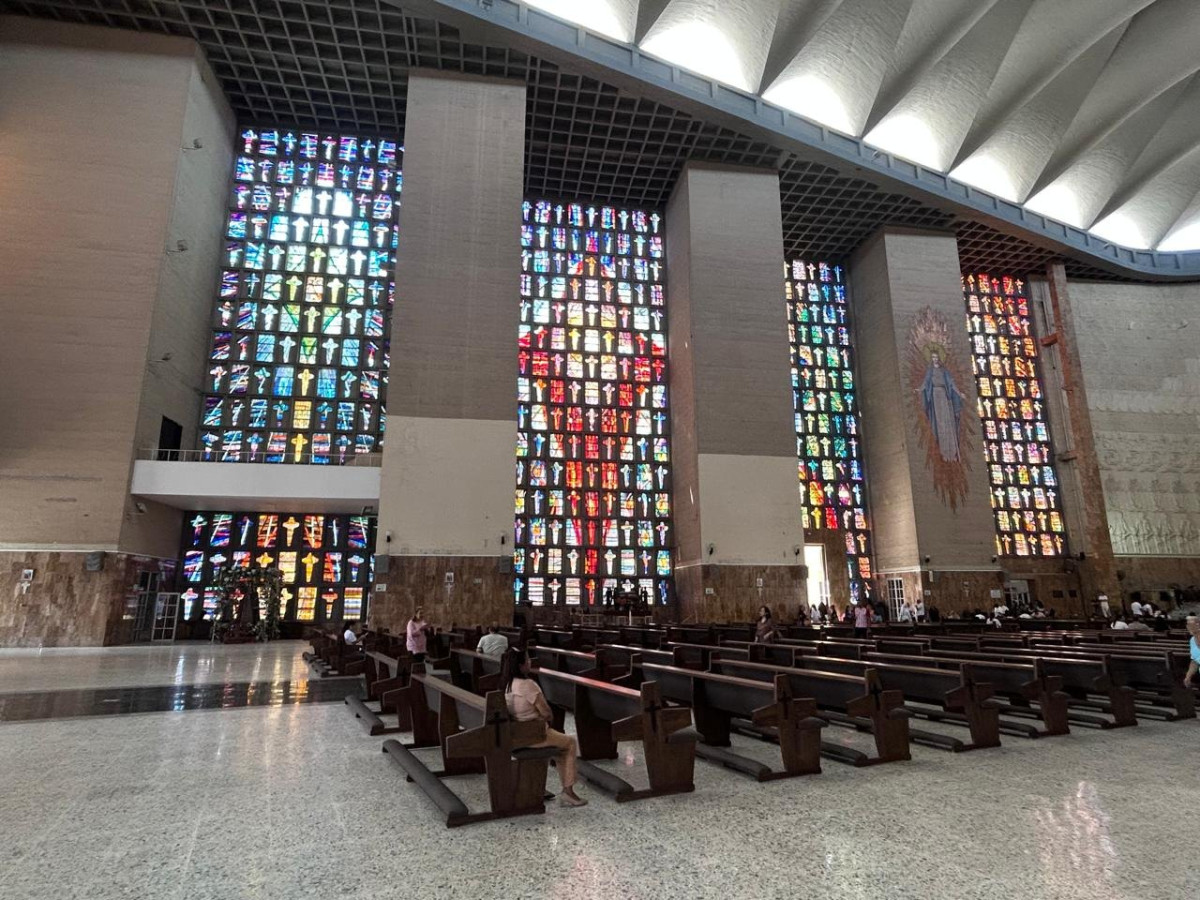
From the outside it does not look like any colonial cathedral in the country, and that is the point. The María Reina Metropolitan Cathedral is a modernist work designed by the Italian Angiolo Mazzoni, which took 27 years to build: it is 92 meters long and 38 meters high and has capacity for about 4,000 people.
Inside, the colored stained-glass windows occupy entire walls and fill the nave with color when the sun comes in. It was consecrated as a cathedral on August 21, 1982 and in July 1986 it was visited by John Paul II.
It faces Plaza de la Paz. Go in quietly if there is a mass and, if you like architecture, combine it with El Prado on the same day. For a photo of the interior, stand at the back of the nave and without flash: that way all the stained-glass windows come in.
6. Seeing the Magdalena meet the sea at Bocas de Ceniza
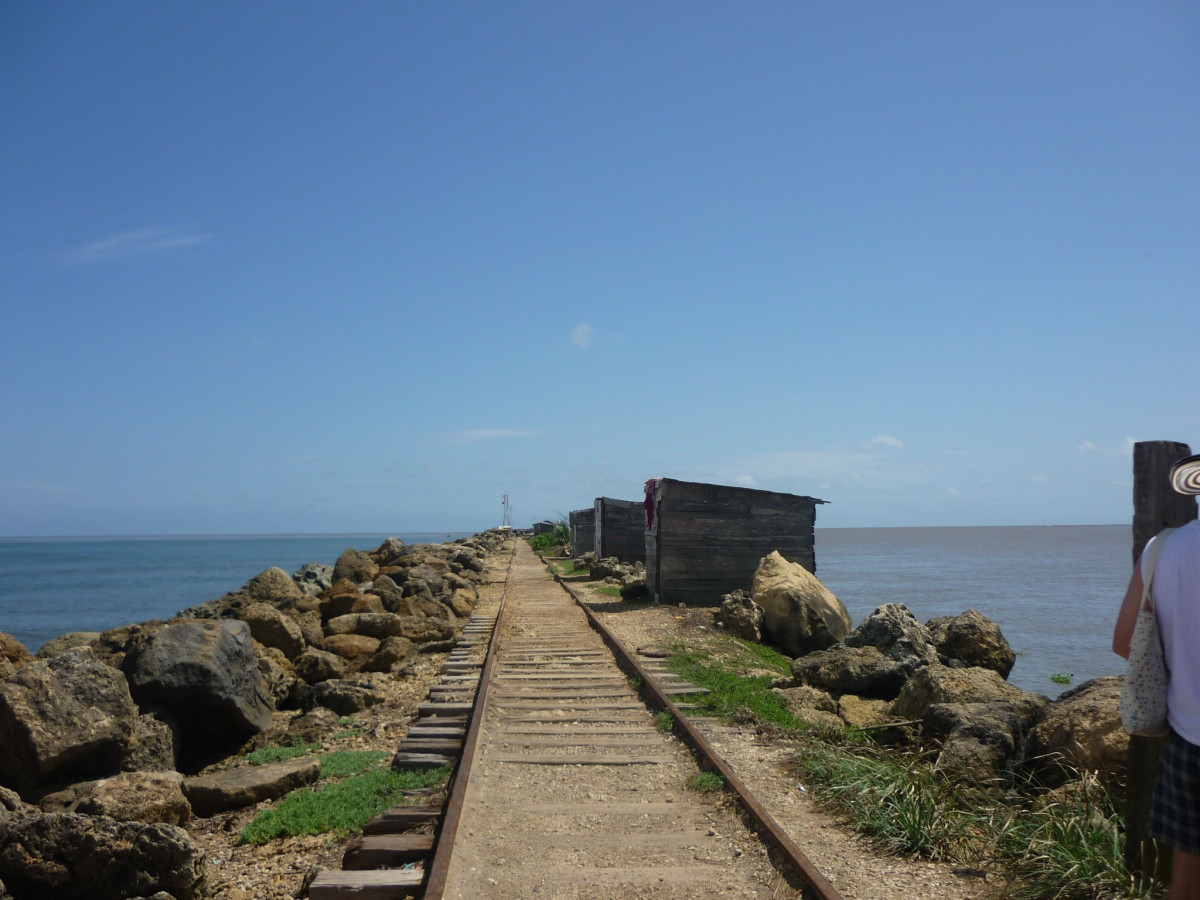
Here Colombia’s most important river ends. Bocas de Ceniza is the mouth of the Magdalena, opened as an artificial channel in 1936 so that ships could enter the port, and over the stone breakwater an old railway line still runs.
The landscape is odd and worth the trip: on one side the brown water of the river, on the other the blue of the Caribbean, and in the middle the line of rocks toward the open sea.
Go with a formal operator who knows the access and the state of the breakwater, and ask beforehand about the hours and what the walk includes. Bring sunscreen, a hat and water, because there is no shade there. At the tip the wind blows hard: keep your phone and your cap well secured.