
The 8 top tourist attractions in Colombia you have to see
Eight places in Colombia worth the trip: a fortress, jungle ruins, a river of colors, an underground cathedral, a monolith, wax palms, stone statues and a desert.
1. Castillo San Felipe de Barajas, Cartagena
Among Colombia’s top tourist attractions, the Castillo San Felipe de Barajas, the Salt Cathedral of Zipaquirá and the Piedra del Peñol are the easiest to reach from a big city. The Lost City, Caño Cristales, San Agustín and the Tatacoa Desert take more time and more travel, and that is exactly why they stay with you.
Updated on November 27, 2026
| Attraction | Where | Good pick if… | Base city |
|---|---|---|---|
| Castillo San Felipe de Barajas | Cartagena, Bolívar | you are into Caribbean military history | Cartagena |
| Lost City (Teyuna) | Sierra Nevada, Magdalena | you can handle several days of jungle trekking | Santa Marta |
| Caño Cristales | La Macarena, Meta | you want to see a river of colors in season | La Macarena |
| Salt Cathedral | Zipaquirá, Cundinamarca | you want a day trip from Bogotá | Bogotá |
| Piedra del Peñol | Guatapé, Antioquia | you want to climb a monolith above a reservoir | Medellín or Guatapé |
| Cocora Valley | Salento, Quindío | you like hiking among wax palms | Salento |
| San Agustín Archaeological Park | San Agustín, Huila | archaeology draws you in | San Agustín |
| Tatacoa Desert | Villavieja, Huila | you want arid landscapes and night skies | Neiva or Villavieja |
Several of these places have visitor caps, seasons or mandatory guides, so check conditions before you go. In natural areas, stay on marked trails and take your trash with you.
If you are planning the whole trip, start with the best destinations in Colombia, and to add small towns, see the most beautiful towns in Colombia.
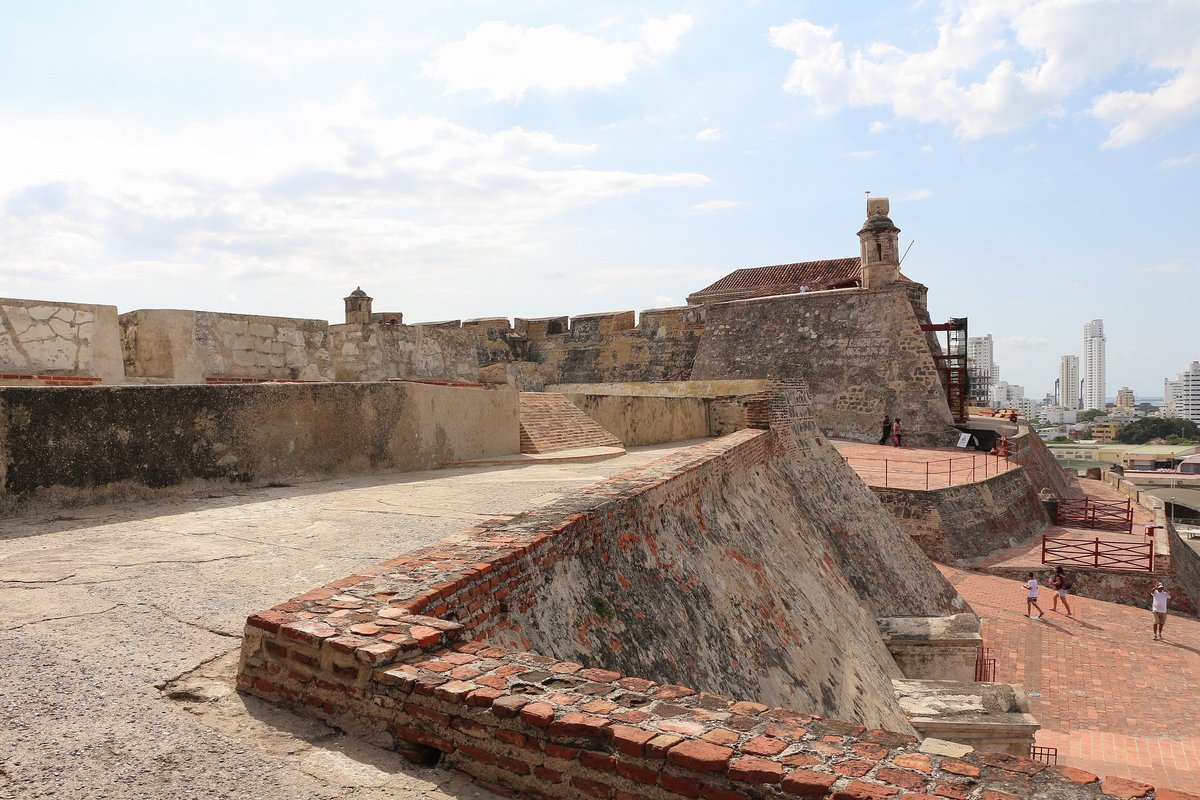
The Castillo de San Felipe de Barajas rises on San Lázaro hill, looking over the city. It is the largest of the fortresses that defended Cartagena in colonial times, expanded in the 17th century, and it is part of the ensemble UNESCO listed as a World Heritage Site in 1984.
The best part is inside: narrow tunnels and ramps climbing between stone walls up to the gun batteries, with views of the Walled City and the bay.
Go first thing or late in the afternoon, because there is no shade up there. For the rest of the city, see the best things to do in Cartagena.
2. Lost City, Sierra Nevada de Santa Marta
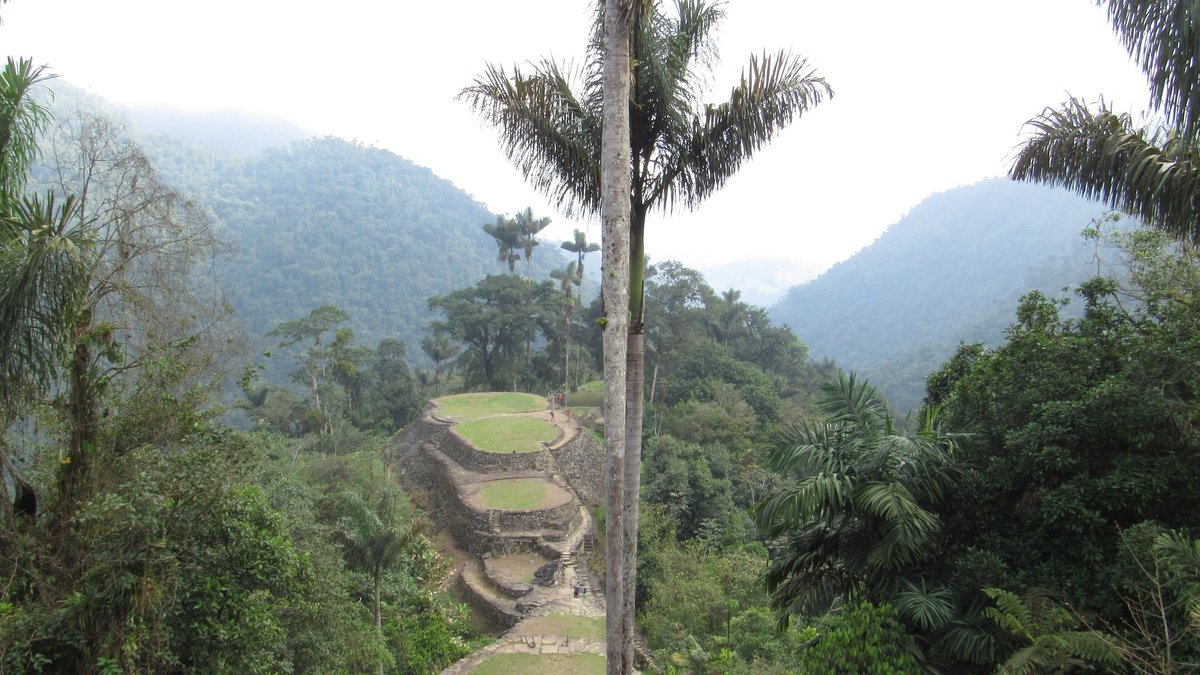
The Lost City, or Teyuna, was built around the year 700 by the ancestors of the Sierra Nevada’s Indigenous peoples, long before Machu Picchu. Its circular stone terraces, covered in moss and surrounded by jungle, can only be reached on foot.
The trek takes several days, with river crossings, mud and humid heat, and it is only done with authorized operators leaving from Santa Marta. At the end, stone stairways climb to the main terraces.
Go in good shape, with shoes that grip in mud and quick-dry clothes. Follow your guides’ instructions: this is sacred land for the Sierra’s communities. The Santa Marta guide helps with the rest of your trip.
3. Caño Cristales, Meta
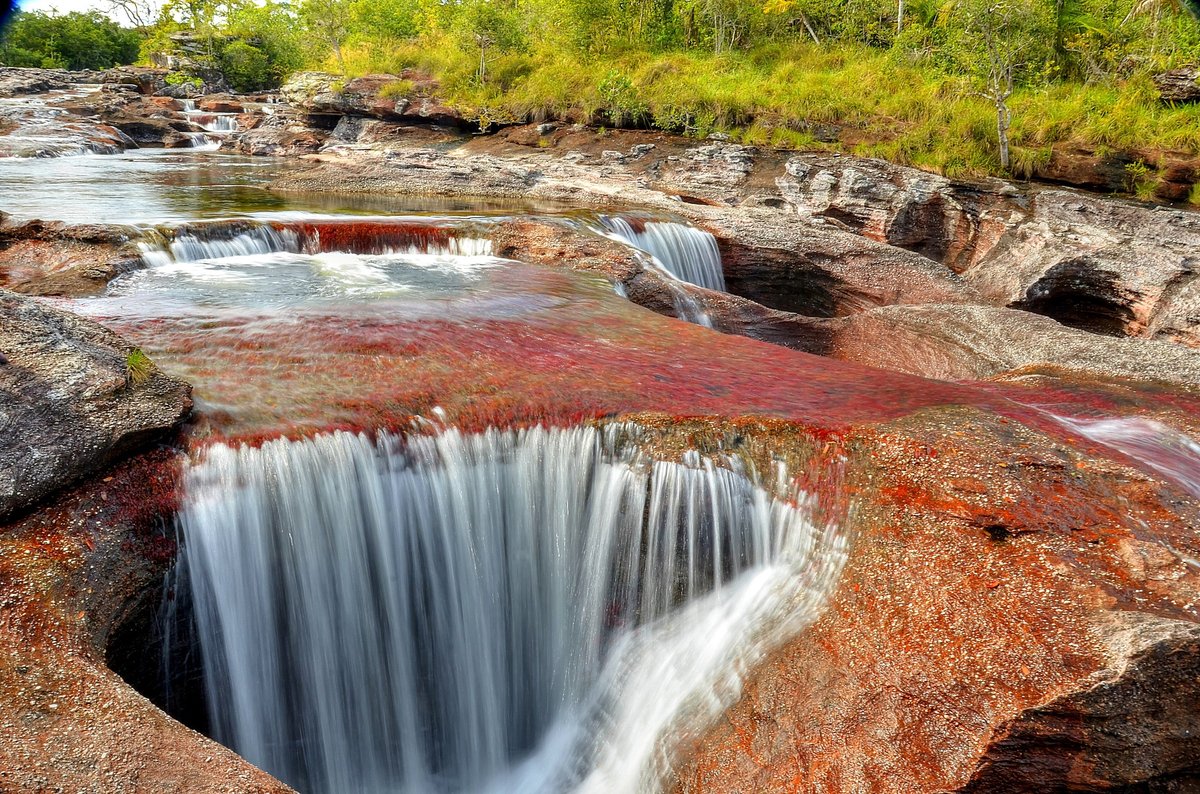
Caño Cristales is a short river in the Serranía de La Macarena known as "the river of seven colors." In season, aquatic plants growing on its bed turn red in the sun, and the water shifts from red to yellow, green and black across rapids, pools and small waterfalls.
The color is not there all year: it depends on water levels, and the visiting season is set by the park authorities. You fly to La Macarena and enter from there with a local guide.
Confirm the season before you buy flights. During the visit, sunscreen and insect repellent are not allowed if you get in the water, to protect the plants.
4. Salt Cathedral of Zipaquirá
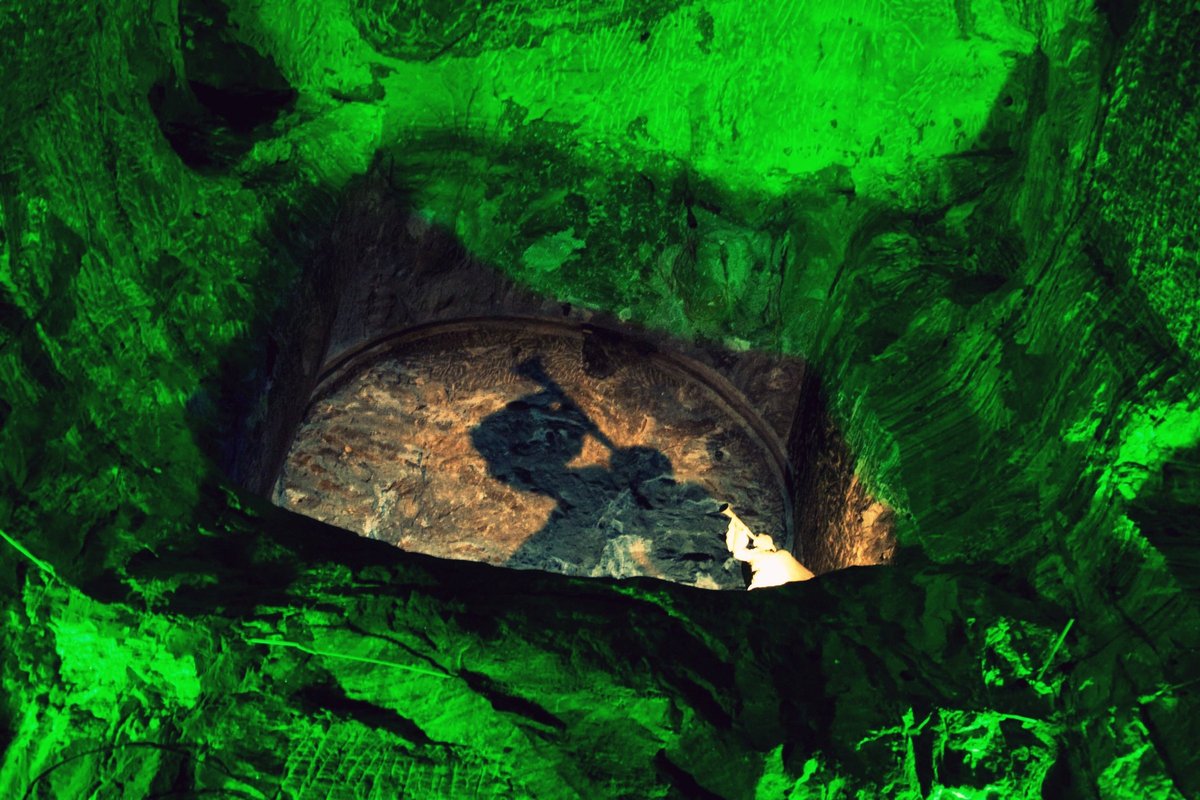
Going down into the Salt Cathedral of Zipaquirá means entering a mine: a dark, cool tunnel that opens into chapels carved out of salt, lit in colors, until you reach a huge central nave underground.
Zipaquirá sits on the savanna north of Bogotá and is one of the most popular day trips from the capital. The route follows Stations of the Cross carved into the rock.
Bring a sweater, since it is cool down there, and leave time to walk around Zipaquirá’s center. You can also go with one of the best tours in Bogotá.
5. Piedra del Peñol, Guatapé
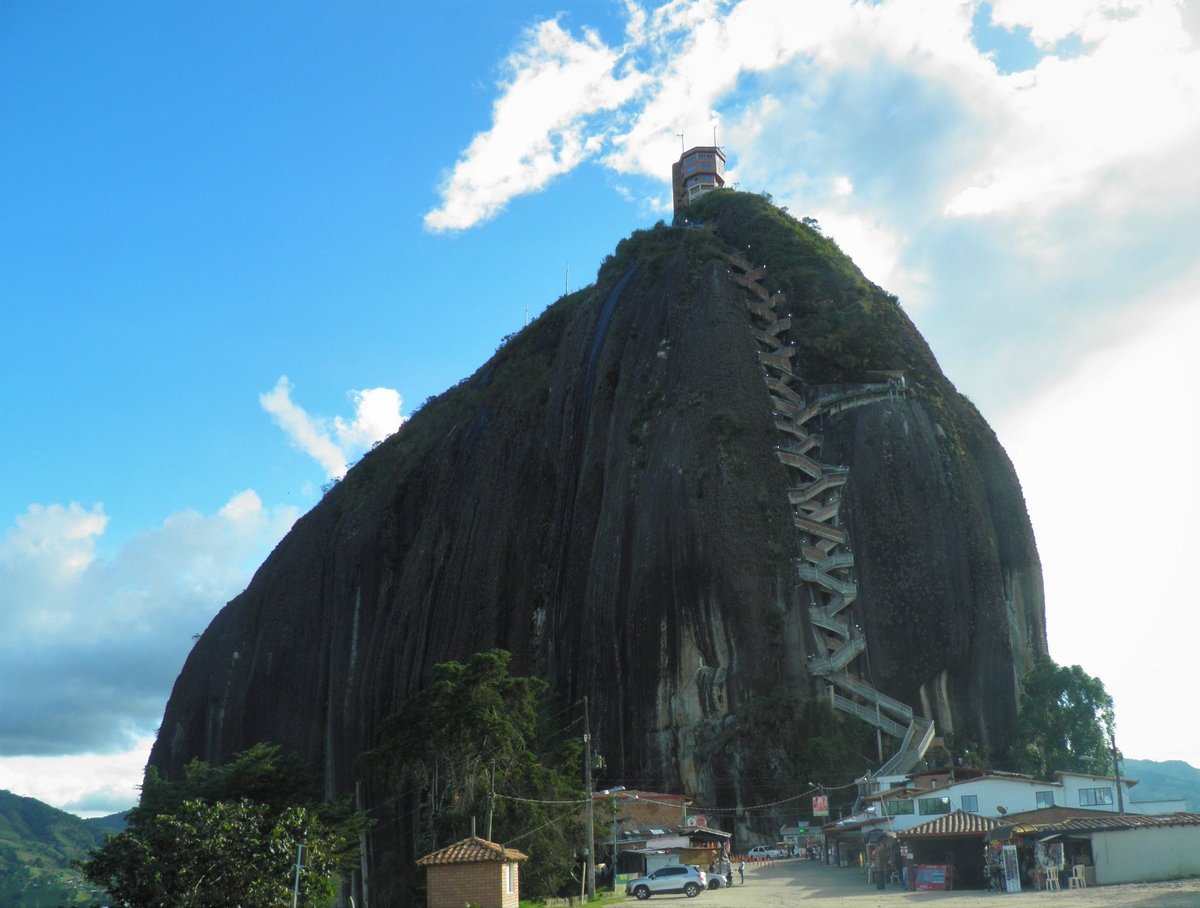
The Piedra del Peñol is a 220-meter monolith rising from the ground next to the Guatapé reservoir. You climb a concrete staircase that zigzags up the rock, and at the top the view stretches over islands, peninsulas and green water to the horizon.
Look closely and you will see a giant G and part of a U painted on one side: someone once tried to write Guatapé’s name, and the painting was stopped.
Climb early to avoid the strong sun and the lines. It is tiring, but you go at your own pace. See what to do in Guatapé to round out the day.
6. Cocora Valley, Quindío
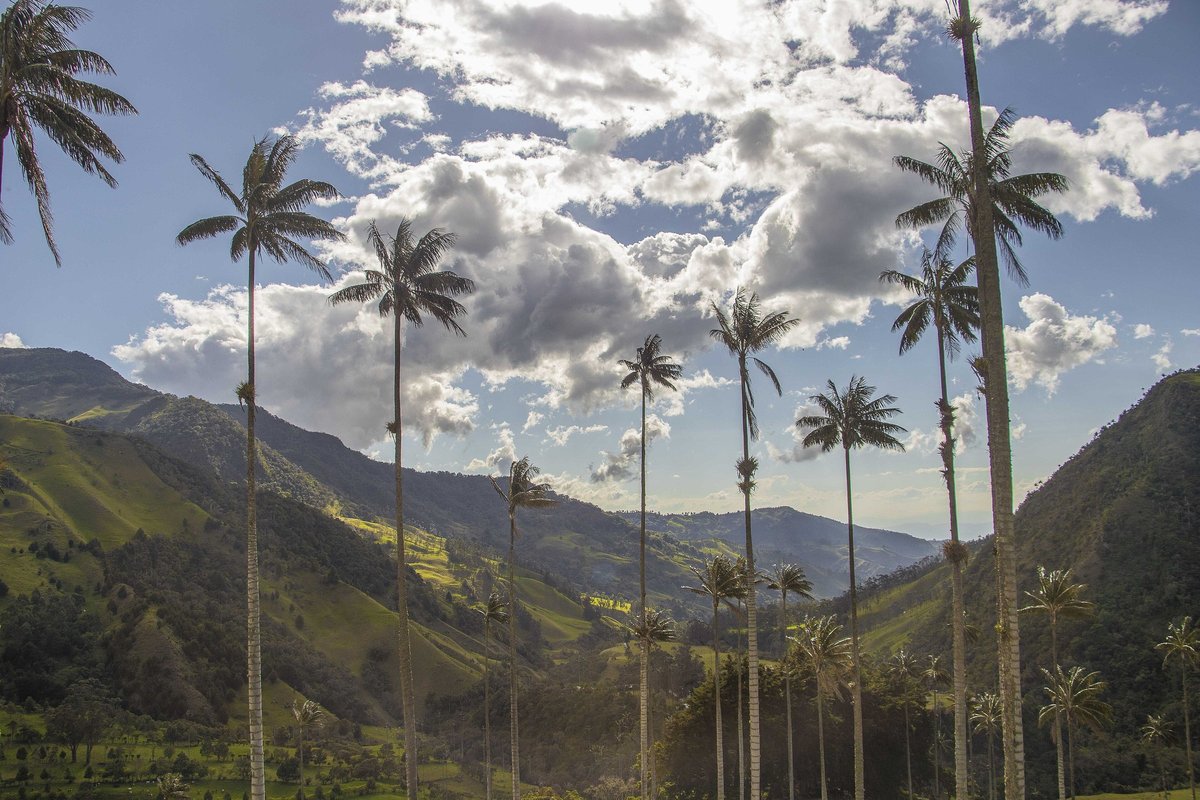
Cocora Valley is home to the Quindío wax palm, Colombia’s national tree, which towers over green pastures and mist. Watching those silhouettes appear through the clouds is the image that made the valley famous.
It is close to Salento, within the area of influence of Los Nevados National Natural Park, and you get there in the Jeep Willys that leave from the town square. There are short walks among the palms and a longer loop that goes into the cloud forest.
Go early: the mist lifts by mid-morning and the trails fill up fast. Bring boots, because there will be mud. For the area, see the best things to do in the Coffee Region.
7. San Agustín Archaeological Park, Huila
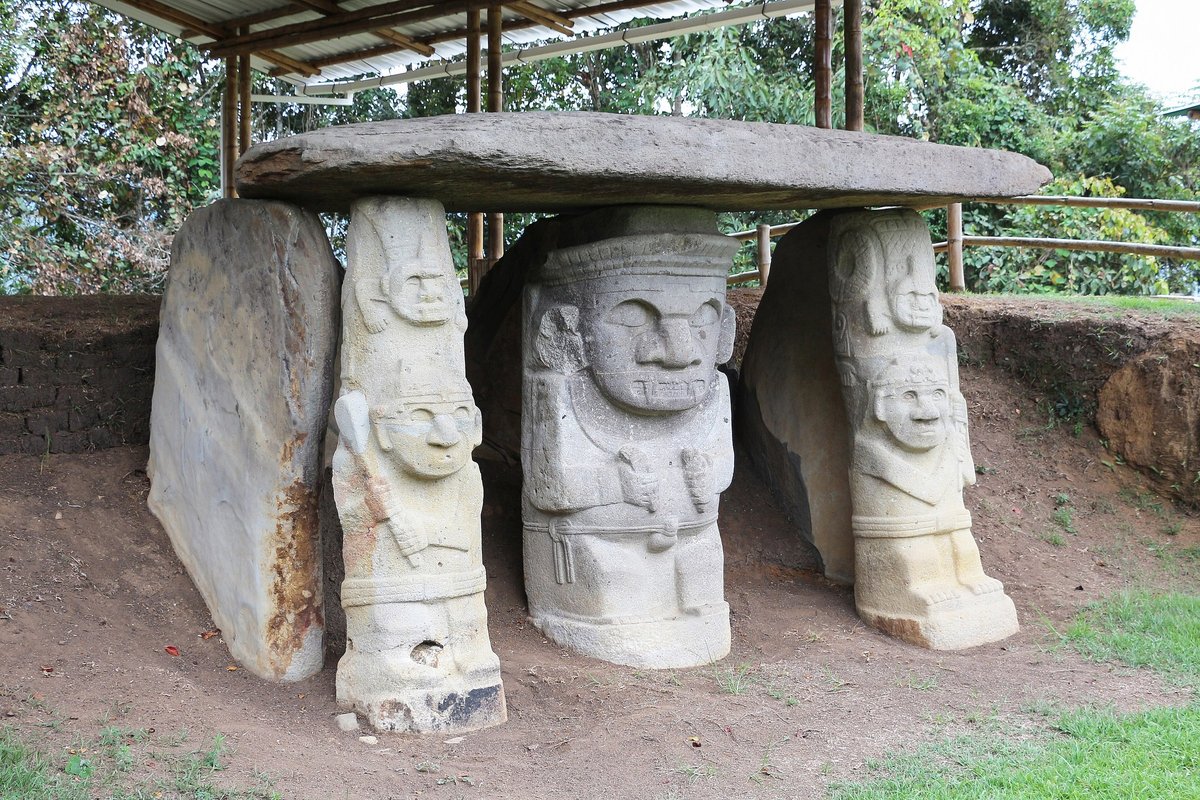
San Agustín is full of stone statues with fangs, huge eyes and animal figures, carved by a culture that lived here centuries ago and about which little is known. The park has been a UNESCO World Heritage Site since 1995 and lies near the source of the Magdalena River.
It is in southern Huila, at 1,730 meters above sea level and about 515 kilometers from Bogotá by road. Besides the main park, the area has other archaeological sites and lookouts over the Magdalena canyon.
Give it at least two days to see the park calmly and explore the surroundings. Hiring a local guide changes the visit a lot, because the statues say more when someone explains what you are looking at.
8. Tatacoa Desert, Huila
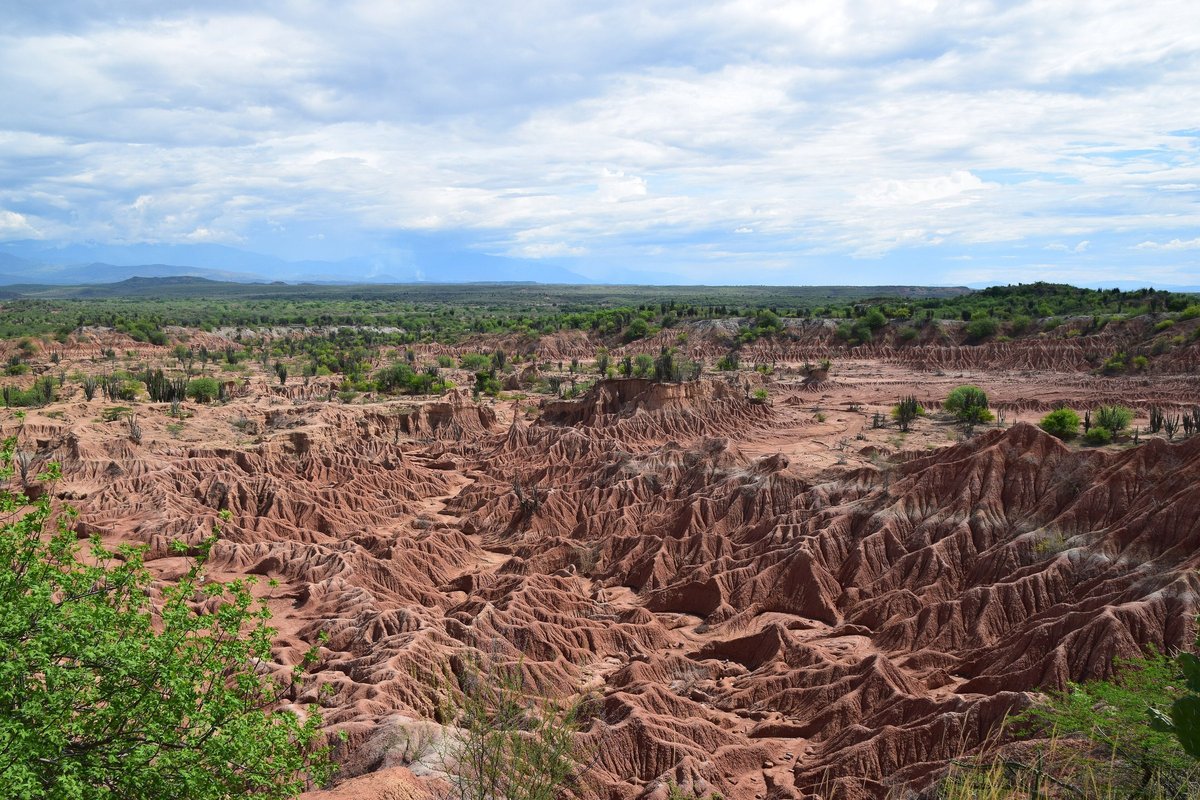
Technically, the Tatacoa is not a desert but a tropical dry forest, yet when you walk among its red and grey gullies, with cacti and a relentless sun, that is hard to believe. It covers about 330 square kilometers in northern Huila.
It has two landscapes: the El Cuzco area, in reddish and ochre tones, and Los Hoyos, which is grey. At night the sky fills with stars, which is why stargazing is one of its most popular activities.
Walk early or late in the afternoon, bring plenty of water, a hat and sunscreen, and stay overnight to see the night sky. The base is the town of Villavieja, near Neiva.