
What to do in the Tatacoa Desert: the 6 best activities
Six things to do in the Tatacoa Desert: get lost among the red gullies of Cuzco, hike the gray zone of Los Hoyos and the Valley of Ghosts, cool off in the pool, stargaze at the observatory and stop in Villavieja.
1. Walk the Cuzco labyrinth
What to do in the Tatacoa Desert comes down to two colors and a sky: the ochre gullies of Cuzco, the gray badlands of Los Hoyos and a night of stars with no lights around. If you only have one day, walk the Cuzco labyrinth early, swim in the Los Hoyos pool at midday and stay for the observatory.
Updated on November 29, 2026
| Activity | Where | Good pick if… | Official site |
|---|---|---|---|
| Cuzco labyrinth | Red zone, near the observatory | you want the classic Tatacoa photo | No official site |
| Los Hoyos gray desert | Los Hoyos sector | you prefer moonscapes and fewer people | No official site |
| Valley of Ghosts | Gray sector, Los Hoyos | you like strange shapes to photograph | No official site |
| Los Hoyos pool | Gray zone | you need a break from the heat | No official site |
| Astronomical observatory | Next to Cuzco | you are spending the night | No official site |
| Villavieja | Town center, 5 km away | fossils and history interest you | No official site |
Strictly speaking, the Tatacoa is not a desert but a tropical dry forest of about 330 square kilometers in northern Huila, 5 kilometers from Villavieja and about 37 from Neiva. It is Colombia's second-largest arid zone after La Guajira, and the sun makes that obvious: temperatures easily top 40°C. Move at dawn and late afternoon, with a hat, sunscreen and more water than you think you need.
For more landscapes like this, see what to do in La Guajira. The Tatacoa also features among the top tourist attractions in Colombia, and if you are planning a longer trip, check the best destinations in Colombia.
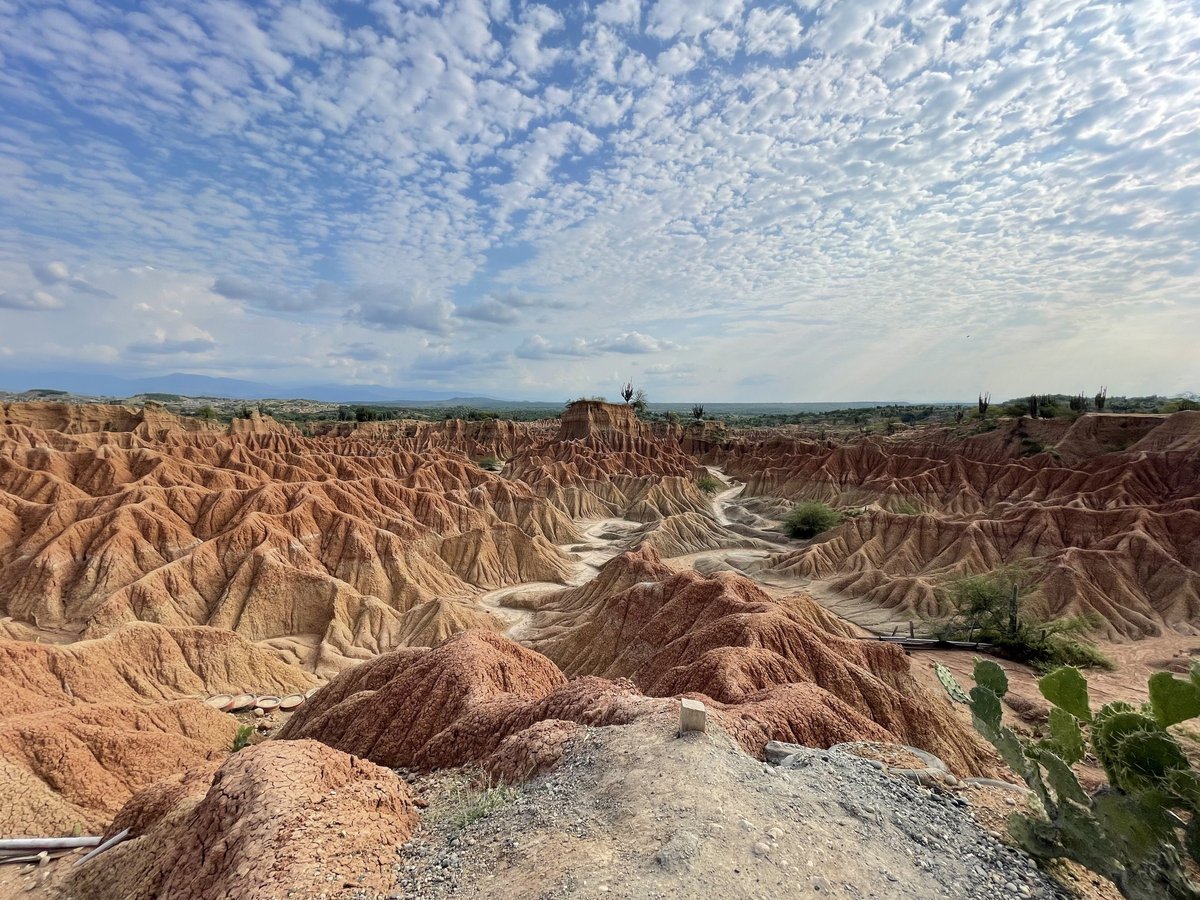
This is the Tatacoa postcard: a maze of brick-red and ochre gullies, with clay walls that rain has carved into ridges, in places up to 20 meters deep. From the lookout you take in the whole thing; down in the corridors the scale shifts and you feel tiny.
The trail starts very close to the observatory, so it pairs easily with a night of stargazing. The best light comes early, when the red glows and walking is still bearable. At noon the clay throws heat back at you like an oven.
Wear shoes with solid grip, since loose soil slides on the descents, and stay on marked paths: the formations are fragile and crumble underfoot.
2. Explore Los Hoyos, the gray desert
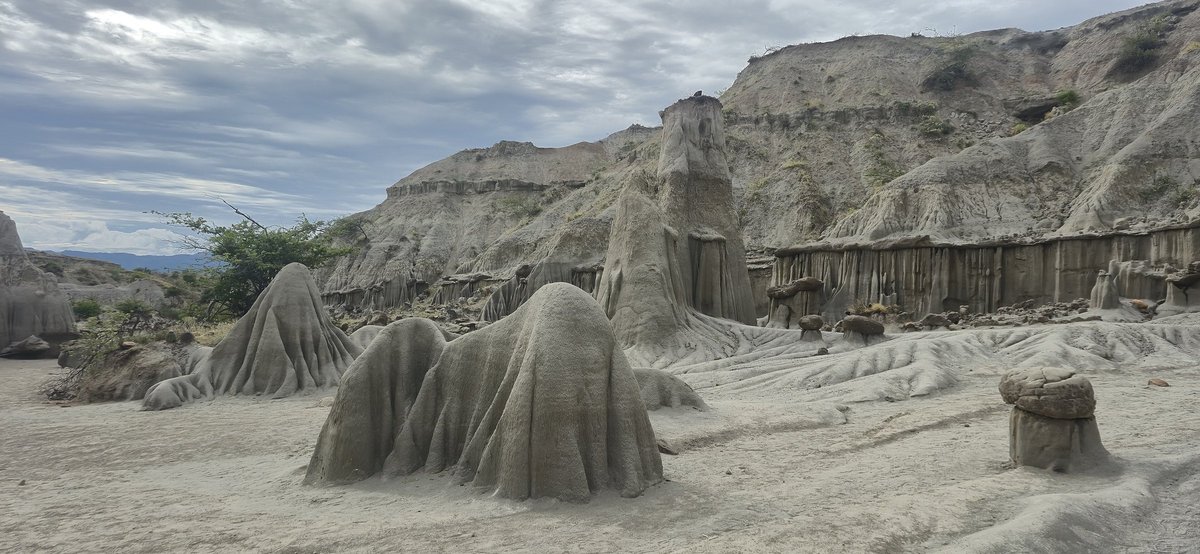
Half an hour farther in, the landscape changes color. Los Hoyos is the gray zone of the Tatacoa, with pale hills, dry canyons and clay towers that look like another planet. There are fewer visitors than at Cuzco and the silence weighs more.
The canyons form during the rainy seasons and stay dry the rest of the year, their floors cracked. Cacti up to four or five meters tall grow between the formations, and in the dry air you hear the wind before you feel it.
A practical tip: if you are driving, ask about the road before setting out, because after a downpour the dirt turns heavy. And bring a wide-brimmed cap; there is almost no shade.
3. Hunt for shapes in the Valley of Ghosts
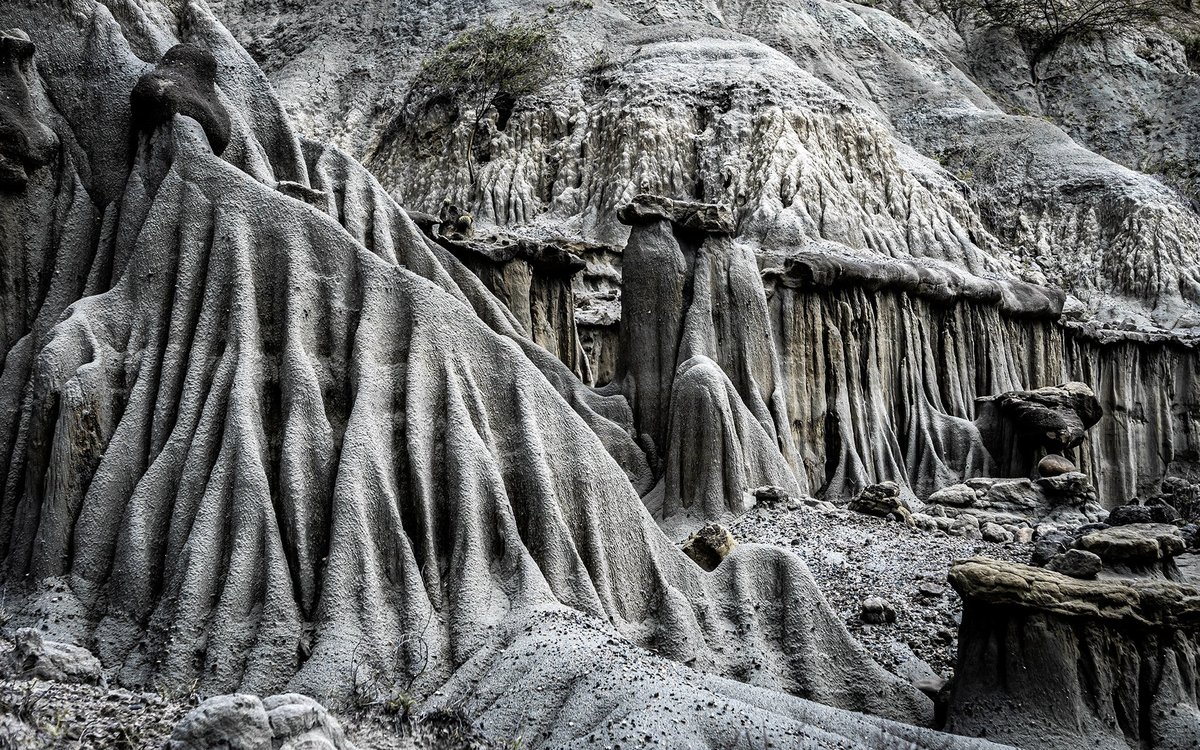
Inside the gray sector there is a corner that earned its name. In the Valle de los Fantasmas erosion left vertical figures with folds that look like hanging fabric, and in late afternoon, with long shadows, it is hard not to see faces and silhouettes.
This is the spot for anyone traveling with a camera. The gray clay textures stand out best in side light, early or after four, and the deep blue Tatacoa sky contrasts with the ashen ground.
Walk slowly and go with a local guide if you do not know the area: the trails are not always marked and look a lot alike.
4. Cool off in the Los Hoyos pool
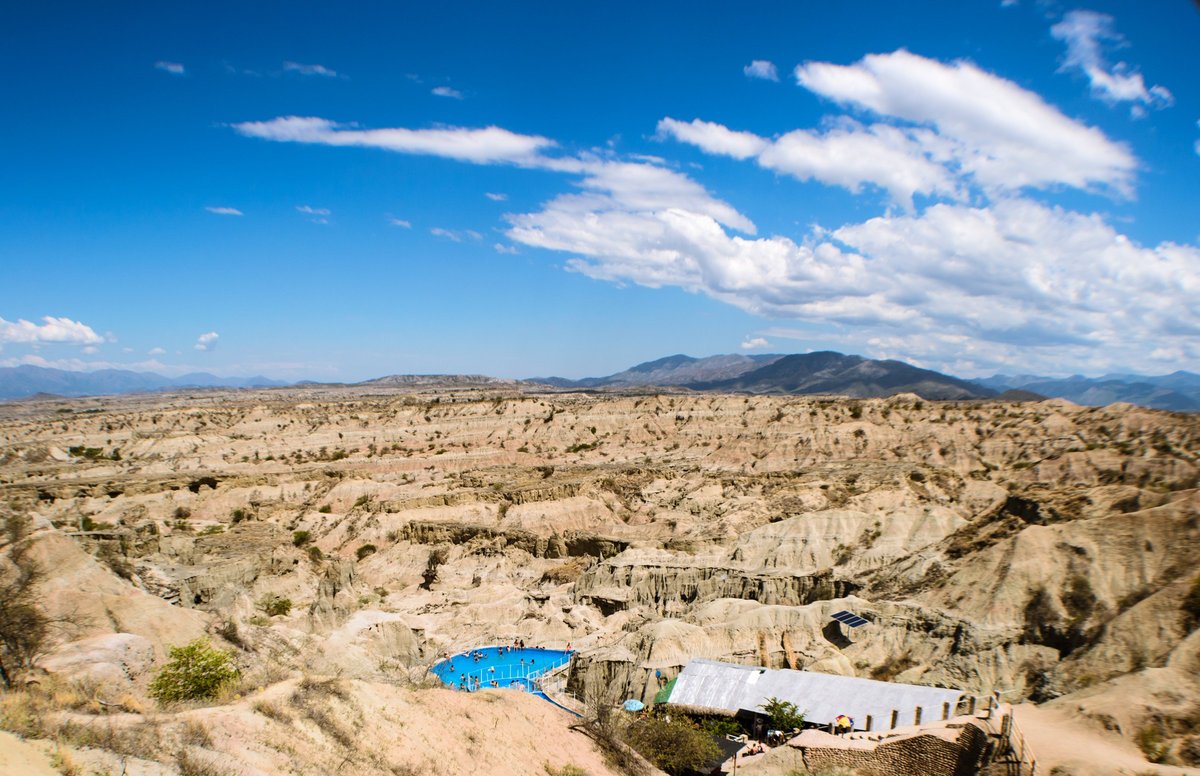
In the middle of the gray zone, just as the heat gets serious, a blue rectangle appears like a mirage. It is the Los Hoyos pool, fed by groundwater, and it has become the obvious stop to break up the hike.
It is not a spa and does not try to be: just a simple pool with a bit of shade, surrounded by gray hills. That is exactly why it works. After two hours of sun, sliding into the water while looking out at the desert is one of the best moments of the day.
There is a per-person entry fee paid on site. Pack your swimsuit in the morning and carry some cash, since card machines are not guaranteed out here.
5. Stargaze at the observatory
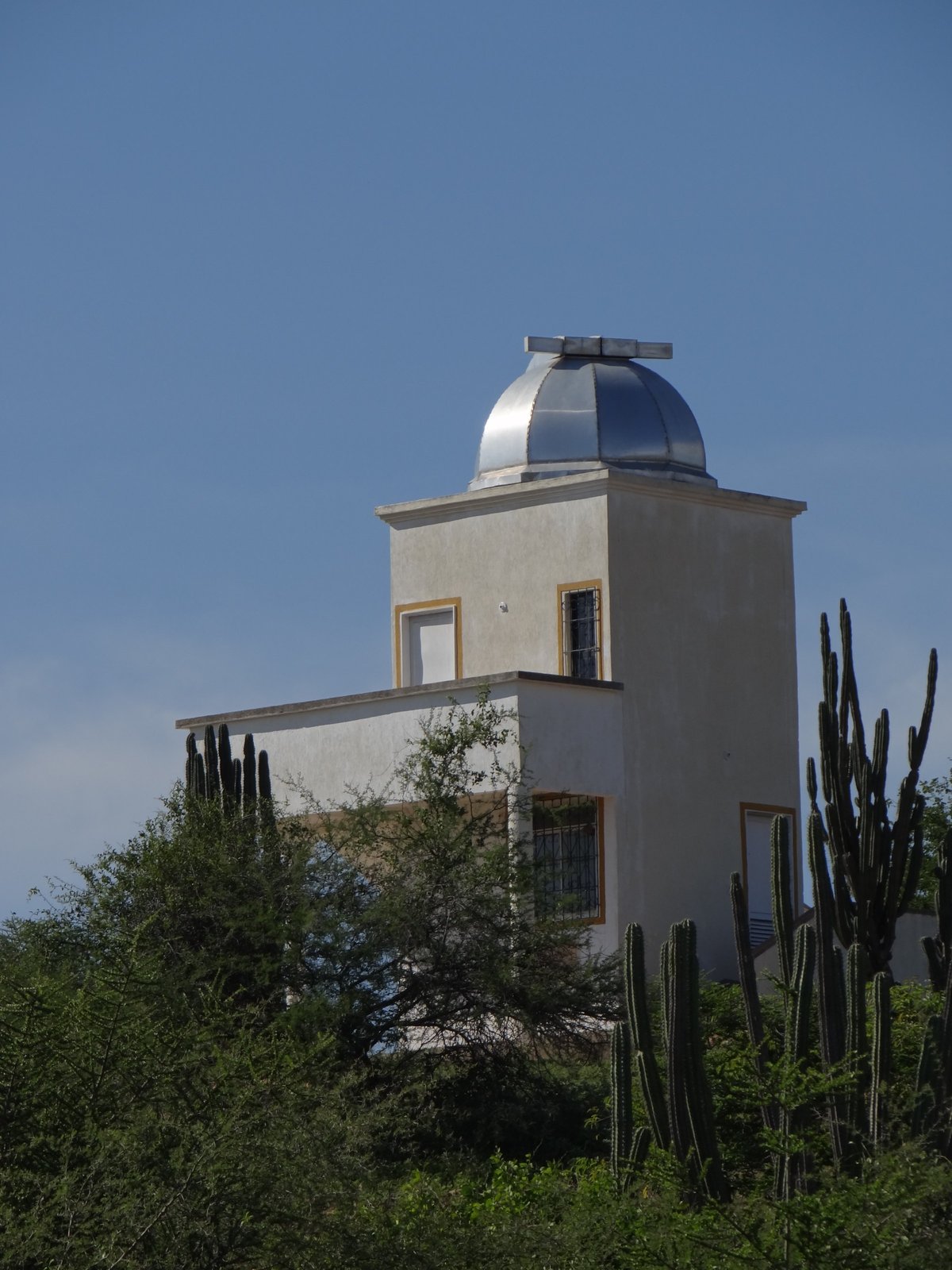
The Tatacoa lies close to the equator and far from city lights, which has made it one of the best places in Colombia to look up. From here you can see constellations of both hemispheres and, on the right dates, meteor showers.
The observatory, a white tower with a silver dome among cacti beside Cuzco, runs night sessions with telescopes and a talk. Several private observatories linked to local guesthouses operate nearby, so if you stay overnight it is easy to find a session.
Check the forecast: a cloudy night ends the plan. Bring a light sweater, because the temperature drops a lot after sunset, and switch off your phone flashlight when asked.
6. Stop in Villavieja for the chapel and fossils
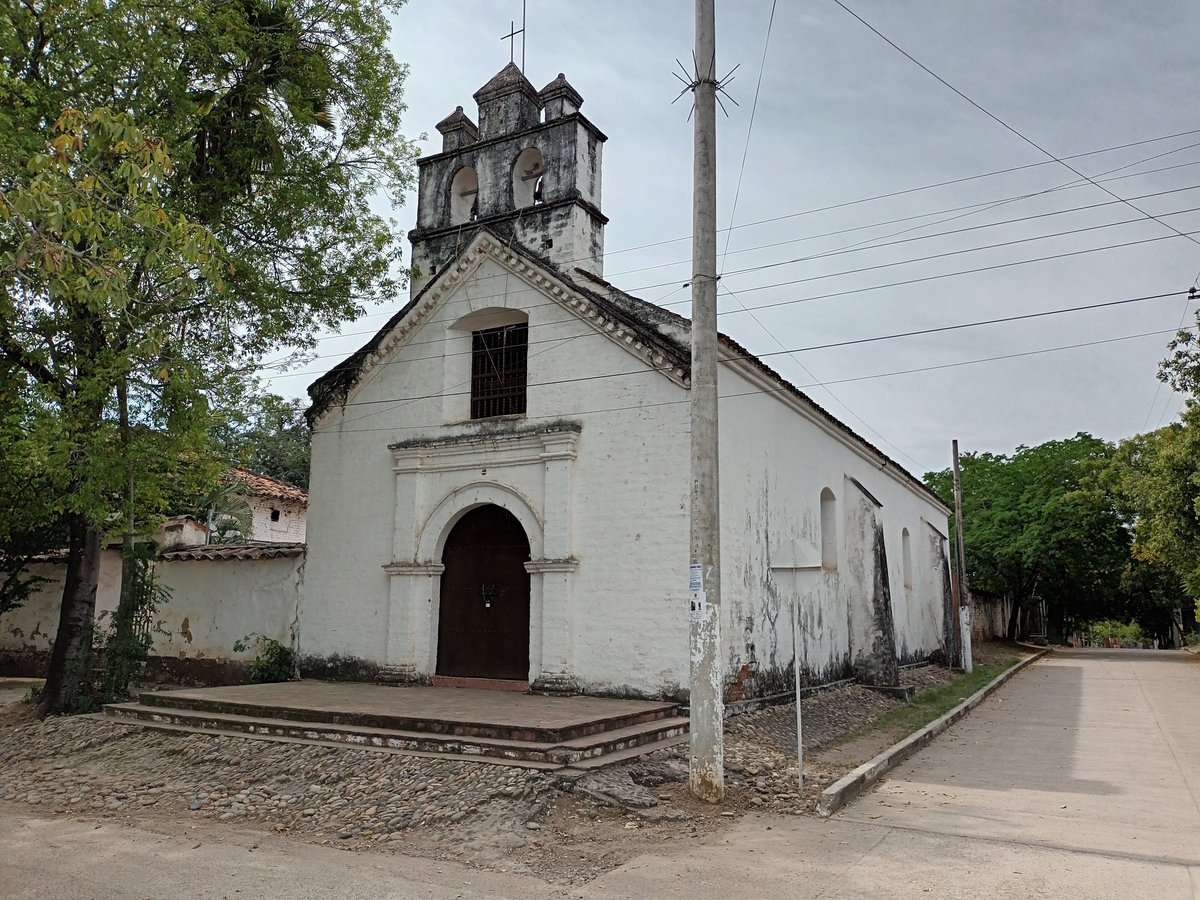
The town of Villavieja, 5 kilometers from the desert, calls itself the paleontological and astronomical capital of Huila, and it has the goods. Its Paleontological Museum, opened in 1984, holds about 950 original pieces found in the Tatacoa: remains of giant turtles, sloths, crabs and fish from roughly 15 million years ago.
A few blocks away is the Santa Bárbara chapel, a white church with a simple bell gable built in the early 19th century on the ruins of a Jesuit chapel and declared a national monument. It takes ten minutes to see, but it helps you understand that this land had colonial life long before it became a tourist destination.
A good plan for the hottest hours. Have lunch in town before heading back to the desert for sunset.